
Urban mining is now government policy
The UK's Critical Minerals Strategy sets a target with teeth: a fifth of the country's mineral demand met from recycling by 2035. The richest deposit is above ground, in the vehicle parc.
The UK government has put a number on something GreenTech Industries has built a business around: by 2035, 20% of the country’s critical mineral demand should be met from recycling.
That target sits at the centre of the Critical Minerals Strategy, the government’s plan to end what the Prime Minister called dependence on “a handful of overseas suppliers.” The framing is security. China controls roughly 70% of rare earth mining and 90% of refining. UK lithium demand is forecast to rise eleven-fold by 2035. Every EV, every wind turbine, every piece of defence hardware runs on materials the UK largely doesn’t produce and can’t currently reclaim.
The strategy’s answer runs on two tracks: 10% of demand from domestic extraction, and twice that from recycling, backed this week by £50 million of deployment funding, including a £25 million accelerator for extraction, processing, and recycling projects and a £20 million National Magnet Hub.
The deposit that’s already above ground
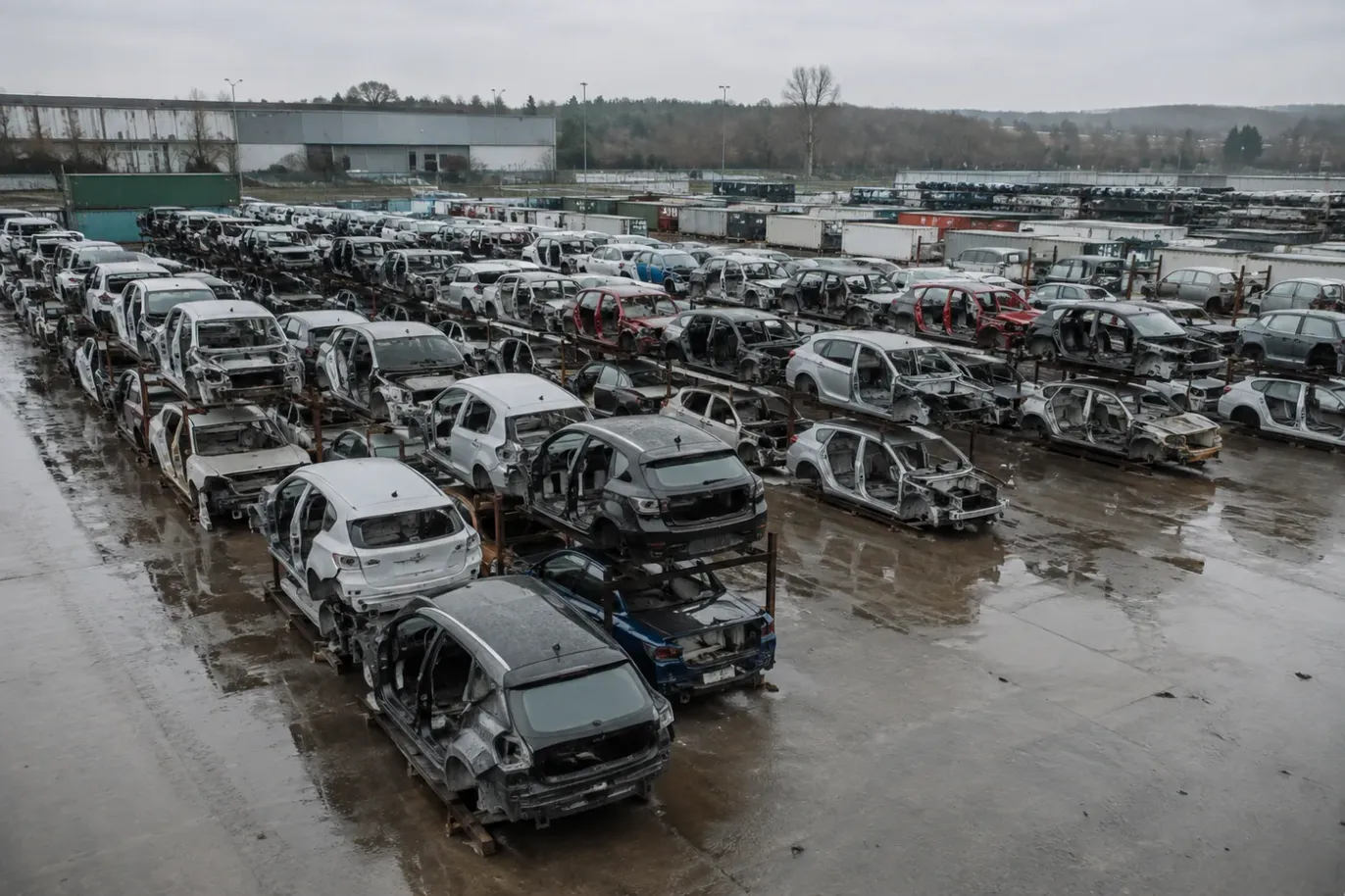
Here’s the part that makes the recycling target achievable: the UK’s richest reserve of critical minerals is already on its roads.
Every EV battery pack holds lithium, cobalt, nickel, and copper that has already been mined, already been refined, already been imported. The SMMT expects around 28,000 tonnes of those packs to reach the end of their first life by 2030, rising to 235,000 tonnes by 2040. That is a domestic mineral deposit measured in six figures, arriving on a schedule, at ground level.
Whether it counts towards the 20% depends entirely on what happens when each pack comes back. Sent abroad or shredded wholesale, the deposit leaks away at its lowest value. Processed properly, with the pack assessed, disassembled with precision and its components and cells recovered before its materials, the same pack pays out twice: usable life back into the economy now, and refined material security later.
Mining without the mine
Urban mining has always been a good phrase in search of infrastructure. What changes now is that the infrastructure has a policy behind it, a target attached, and funding moving.
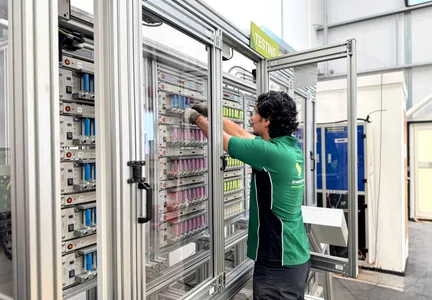
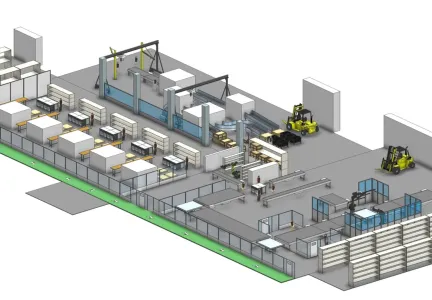
GTI’s precision disassembly line is that infrastructure at pack level, the point where a returned battery stops being waste and starts being a resource: components, cells, data and remaining usable life, recovered in that order, with materials as the final stage rather than the first. The government has set the destination. The capability to reach it gets built one pack at a time.
Source: UK Critical Minerals Strategy (Vision 2035), November 2025; £50m deployment announced June 2026. UK battery volumes: SMMT.