
GreenTech Industries sits at that connection point by design, set up by founders who’d spent their careers building battery programmes for the world’s most demanding vehicle brands and knew exactly what kind of industrial partner the UK research community needed. That’s why people who work here describe the work as a cause.
Innovation & Partnerships
Industrial innovation that creates spacefor collaboration.
GreenTech Industries innovates at industrial scale and partners with the UK’s research community to take that innovation further, faster, backed by nine years of operational R&D, a fully owned 66-entry IP portfolio and live consortium programmes running through the line.
UK battery recovery has the science and the skills. What it has lacked is an industrial innovator already running the line at scale, generating data, refining process and building IP every cycle. That’s the role GTI plays.
Why we collaborate
A shared problem needs
a place where the work comes together.
The UK has set itself targets that need more than one institution to meet. The Critical Minerals Strategy commits to 20% of national demand met through recycling by 2035, and the UK Battery Strategy projects around 150,000 tonnes of end-of-life battery packs needing processing each year by 2035. Universities and research organisations hold the technical knowledge, and UK industry has the manufacturing capability.
What’s been missing is the connection point, the operational environment where research becomes practice, where what universities discover gets to live a commercial life, and where the data the research community needs gets generated by real packs moving down a real line.
Without an industrial partner, university IP stays in labs and demonstrators. With GreenTech Industries, it becomes a UK capability: robots, factories, jobs and downstream feedstock.
What we innovate
Our work. Yours to build on.
Industrial innovation and research partnership work as one route, each creating space for the other. The innovation GTI does on the line is what gives our consortium partners somewhere real to push further: an operational environment with paying customers, live data flows, and proven process discipline. Without it, partners are stuck at lab or demonstrator scale. With it, research moves into industrial deployment faster, and the data the line generates feeds back into the next research cycle.
Four innovation streams build on that operational foundation.
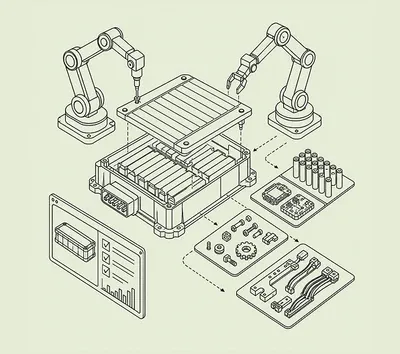
Automated precision disassembly
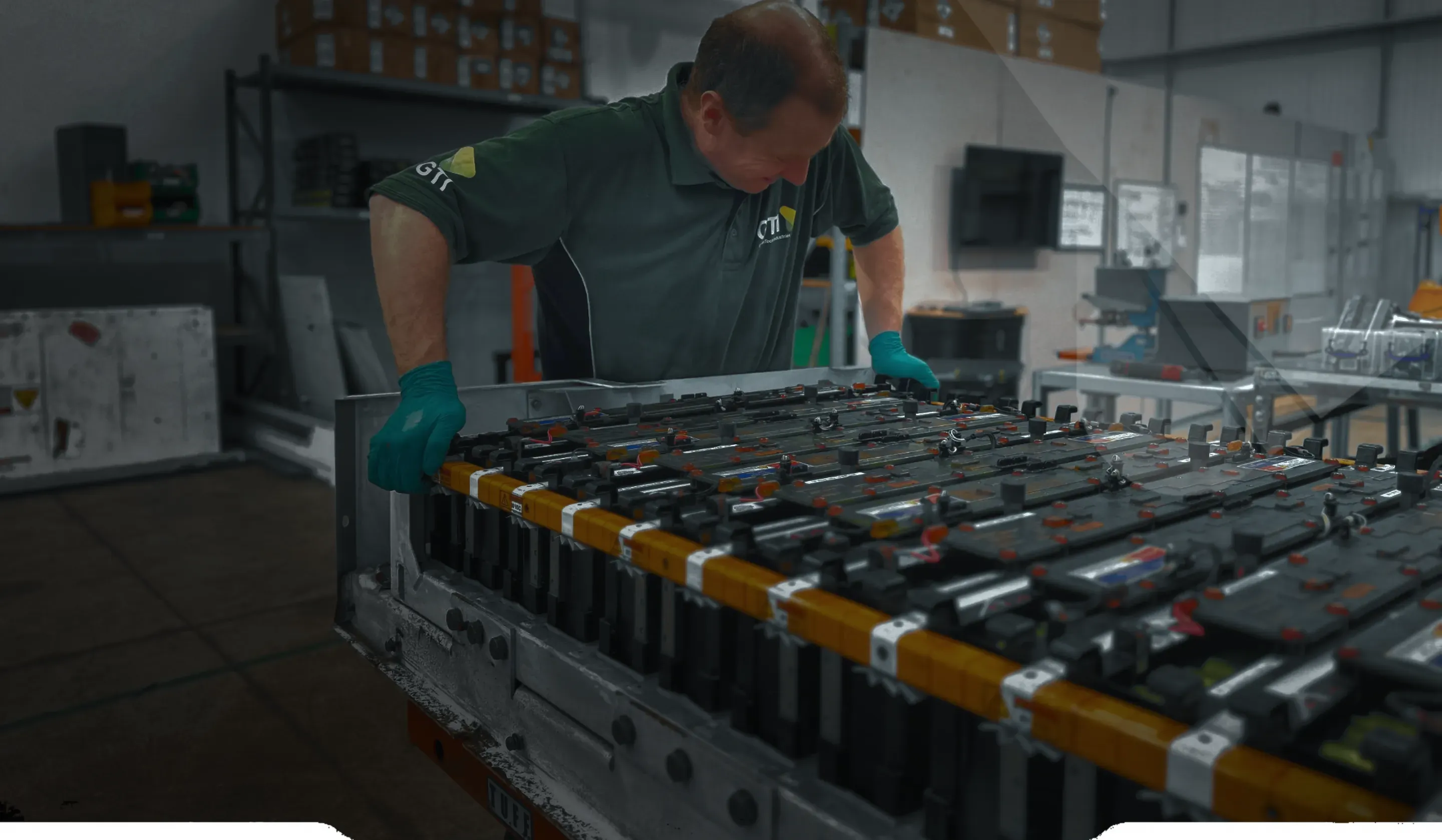
Building the line that takes batteries apart precisely enough to recover components, cells, data, and remaining usable life. Today’s manual SOPs evolve into a digital, AI-led process in the next phase.
Purit-E Programme
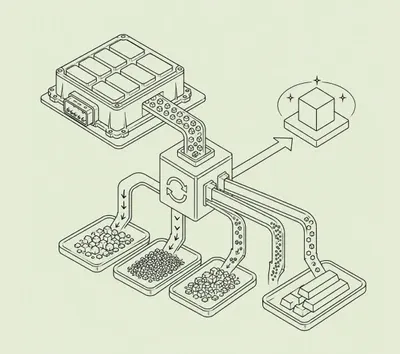
GTI’s own science programme, now being scoped to run from the end of Mobilise26 into the start of AutoDMR. It is designed to purify recovered materials so they can go straight back into reuse, giving higher-value recovery and cleaner feedstock for refiners, and is being developed with Coventry University to lift the 186kg-per-pack recovery fraction higher still.
Proprietary
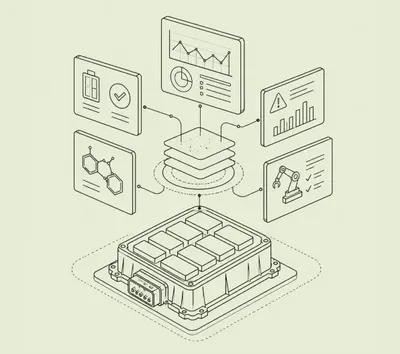
digital layerThe data engine being scoped through Mobilise26 and built through AutoDMR, designed to run underneath every battery processed: capturing state of health, chemistry, failure modes and disassembly data, and using it to evolve the next pack’s process. A digital twin built on live commercial operation.
Motor & drive-unit disassembly
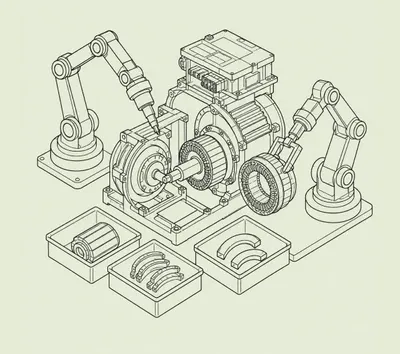
The next-stage innovation: applying GTI’s disassembly methodology beyond battery packs to electric motors and drive units, recovering rare-earth magnets, copper windings, and high-value stator components before they reach the shredder. Same operational discipline, a different part of the EV.
66
IP entries, fully owned.
Accumulated from every battery processed since 2017: SOPs, automation methodologies, safe-discharge procedures, diagnostic data, HV training, brand identity. Free of university restrictions, clear of consortium claims, and developed or acquired by GTI.
This is the innovation base. Consortium work makes it move faster.
How we work
Industrial scale meets research,
and the UK gets the capability.
Five things make the collaboration work. Each is familiar on its own; the way they fit together is what creates a working consortium and gets research into use.
GTI brings industrial-scale innovation.
An operating line with paying customers, live data flows, and a documented chain of custody. Research outputs that need to prove themselves at industrial scale find an environment already running here and ready to absorb new work.
Partners bring specialist research capability.
Universities and research and technology organisations bring deep science: algorithms, robotics, materials capability, laser-processing expertise. We integrate their work into operational systems and feed operational data back into their research. Their science extends our process. Our process becomes their evidence.
The data loop is what changes things.
Every battery processed at GTI generates state-of-health, chemistry, failure-mode and disassembly data. That data sharpens the research models partners bring, trained in commercial conditions. The loop is what turns single-pack research into industrial reliability.
IP retention is clean by design.
Operational IP that emerges from the line stays with GTI. That’s what protects the UK commercial position and lets us invest in the next stage. Research IP and academic outputs stay with the institutions that generate them, so every partner knows from the start what they own.
Programme governance
GTI acts as lead applicant on multiple live consortium programmes. GTI brings the programme management discipline academic and research partners often need from an industrial lead: monthly steering, gate-controlled milestones, named owners, documented exception management. That structure is what gets the collaboration delivered.
What this unlocks
When research finds the right
industrial partner, things move.
Capability
The underpinning knowledge the enabling programmes build: assessment, automation, cell-level recovery and scale. Built once, drawn on by every programme.
Customers
More customer programmes in Retention, Regeneration and Reinvention, each new programme starting further ahead.
Markets
New markets beyond them: new sectors and new geographies, with the same capability doing the work.
The university publishes the paper and GTI puts it into practice, so the capability stays in the UK.
What we build together
Our collaborations,
all building UK capability.
Under each of GTI’s three values sit live customer programmes: packs retained, fleets regenerated and products reinvented. The consortium programmes below cut across all three: built with university and industry partners, they sharpen the capability every programme draws on, from pack to module to cell, and into UK-wide scale.
Automating the disassembly line.
With Manufacturing Technology Centre · Coventry University Centre for E-Mobility & Clean Growth
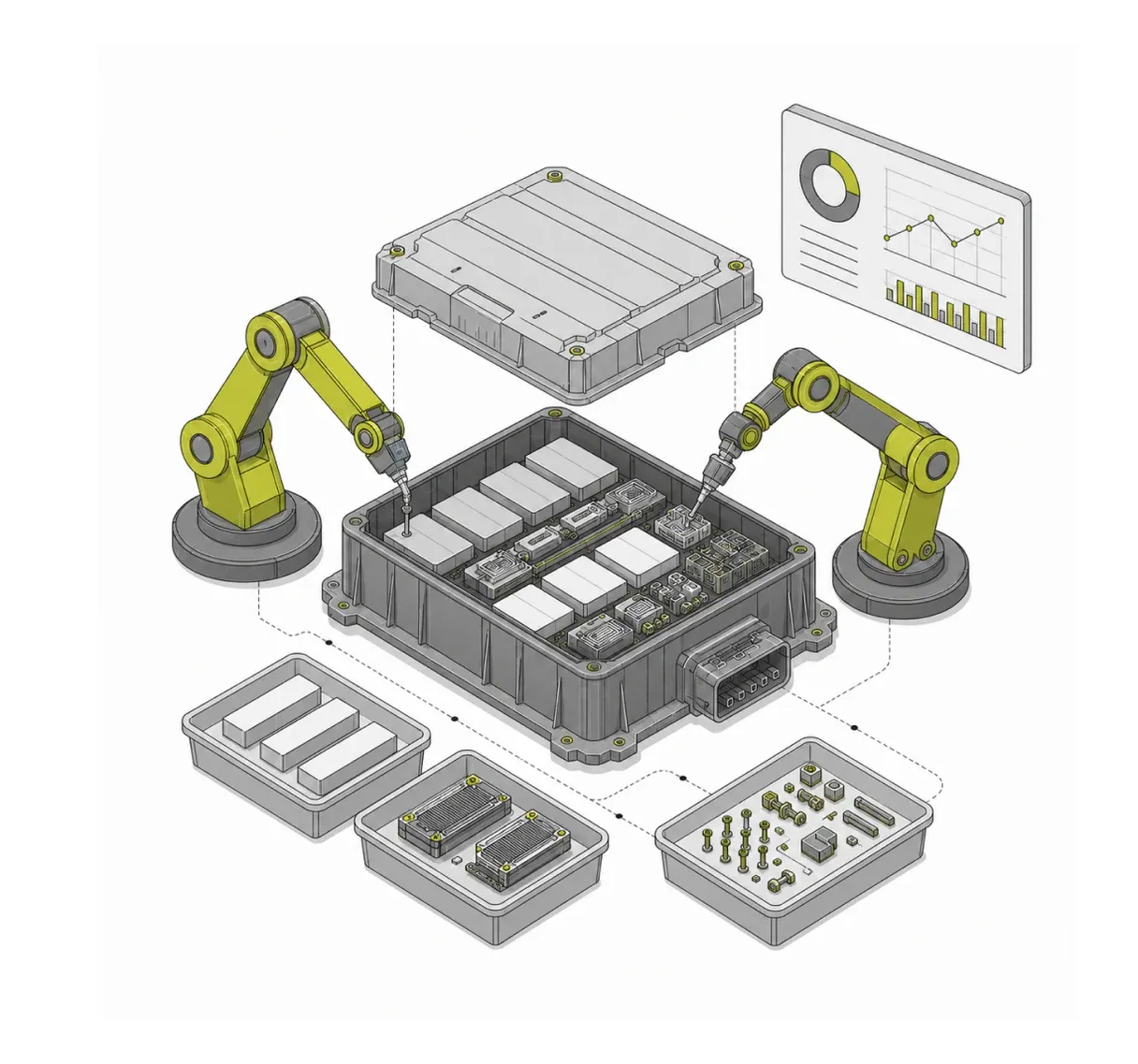
GTI has spent nine years innovating its own precision disassembly process, building the methods, the SOPs and the line, with the digital layer now in development. The consortium is the acceleration: with MTC, we’re applying their automation, robotics and laser-cutting expertise to lift our throughput from 190 kg per hour to a target of 1,500, an 8× improvement, and to cut cycle time from four hours to ten minutes per pack. With Coventry University, we’re extending our existing classification work with physics-informed machine learning so every pack auto-configures the line.
What it unlocks
A UK-built, factory-rate precision disassembly line, developed with UK partners and owned and deployed in the UK.
Purit-E Programme
With Coventry University Centre for E-Mobility & Clean Growth
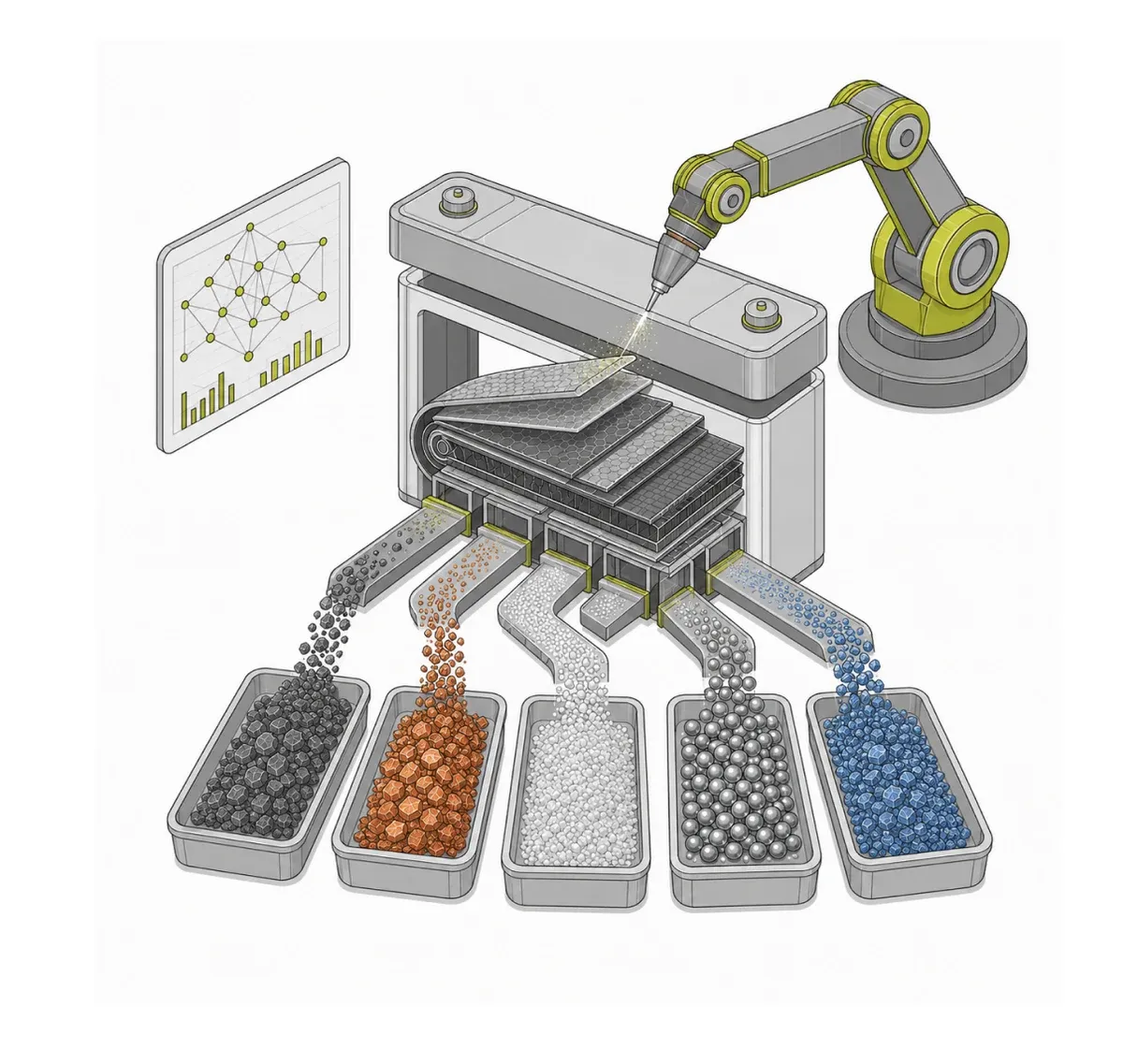
GTI’s own science programme, now being scoped to run from the end of Mobilise26 into the start of AutoDMR. It is designed to purify recovered materials so they can go straight back into reuse, giving higher-value recovery and cleaner feedstock for refiners, and is being developed with Coventry University to lift the 186kg-per-pack recovery fraction higher still.
What it unlocks
Material recovered pure enough to go back into manufacture directly, and a higher recoverable fraction from every pack, so more of each battery can be kept at its highest value, in the UK.
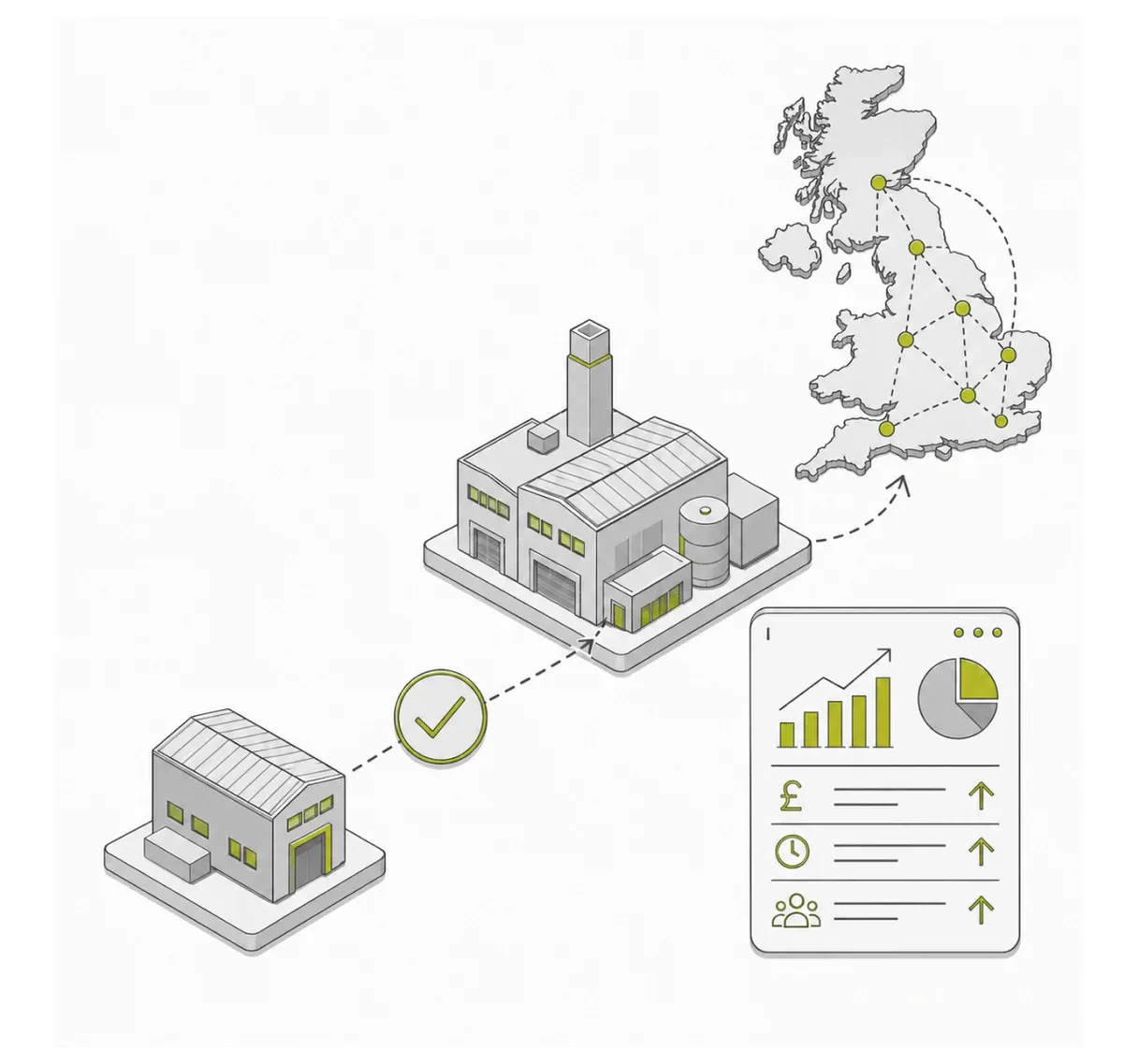
Scaling beyond Westfield Road.
From one proven facility to a UK-wide capability
Westfield Road is the blueprint: the line, the unit economics, the IP strategy and the partner network, brought together in one place and built to be repeated, with the digital twin following in the next phase. The plan is other parts of the UK first, then international markets.
What it unlocks
The move from one operating facility to UK-wide capability. A blueprint the UK can keep building from.
The network behind the work
Partners across UK research,
manufacturing, and skills.
GreenTech Industries works across the Coventry–Warwick–Gaydon electrification cluster and beyond, with universities, research and technology organisations, national facilities, and skills providers. These are the partners and institutions we collaborate with.
Universities

Coventry University
Centre for E-Mobility & Clean Growth. Battery diagnostics, machine learning, digital-twin BMS.

University of Birmingham
School of Engineering. Cell-level science, laser processing, robotics; £34m Faraday Institution ReLiB research.

University of Oxford
Independent assessment of recovered materials; BattStore and BattRev validation (2020–23).
Research & Technology Organisations

Manufacturing Technology Centre (MTC)
Ansty Park. HVM Catapult member. CHARGE cell (£1.85m DSIT-funded).

UK Battery Industrialisation Centre (UKBIC)
Coventry. National scale-up and validation environment.

Warwick Manufacturing Group (WMG)
Applied research in electrification, battery systems, digital manufacturing.
Skills, Integration & Funding



Around all of this sits the wider regional ecosystem: the Midlands Engine, the High Value Manufacturing Catapult, and the wider Coventry–Warwick–Gaydon electrification cluster.

Equality, diversity & inclusion
EDI is
engineered into the way we work.
Working at GTI means skilled roles on the precision disassembly line, engineered for safety: robotics supervision, control systems, diagnostics and integration. A safer line is an open line: more people can do this work, build a career, and stay. That’s the design brief.
Collaboration is where it counts. GTI programmes run from lecture theatre to factory floor, taking in universities, research organisations, integrators and one production line in Warwickshire. They work because the routes in are real: apprenticeships and internships beside MSc and PhD research, high-voltage training with Warwickshire College Group, STEM outreach with our university partners.
It runs like everything else GTI builds, as a discipline: inclusive recruitment as standard across programme roles, with progress reviewed at programme boards.
A new industry should be open from the start.
A new industry needs a wide pool of talent. The point of collaborating is that people come at the problem from different directions, and our job is to push those doors open.
Routes into the work
HV training · WCG
Internships
MSc / PhD · university partners
The line
Working with GTI
The industrial partner UK consortiums need.
Universities, research organisations, OEMs and consortium funders come to GTI for the same reason: the work needs an industrial environment to live in. We bring the operational scale, the IP discipline, and the route to market that turns research into manufacturing, along with the credibility consortium funders need to back the work in the first place.
Research institutions & RTOs
If you have the science.
You have IP, algorithms, robotics, or materials capability. We give you the live operational context to validate it. Joint programmes, published research, dissertations and student work are all welcome, with IP arrangements clean by design.
OEMs & industrial suppliers
If you have the vehicles.
You have programmes, service networks, or upstream material requirements. We turn end-of-life packs into qualified components, traceable data, and chain-of-custody documentation, at industrial scale, on a precision disassembly line built for warranty-grade output.
Consortium & programme funders
If you back the work.
GTI acts as lead applicant on multiple live consortium programmes, bringing programme governance, RAID discipline, IP discipline and a commercial exploitation pathway that returns public investment to UK industrial capability.
If you’re a researcher, a manufacturer, or building something the UK doesn’t have yet,
let’s talk about what we could build together.