
Company · DRIVE35
GreenTech Industries secures DRIVE35 funding to automate its EV battery disassembly line
A government-backed project, AutoDMR, will take GTI's live Southam operation from manual work to high-rate automation, in collaboration with the Manufacturing Technology Centre and Coventry University.
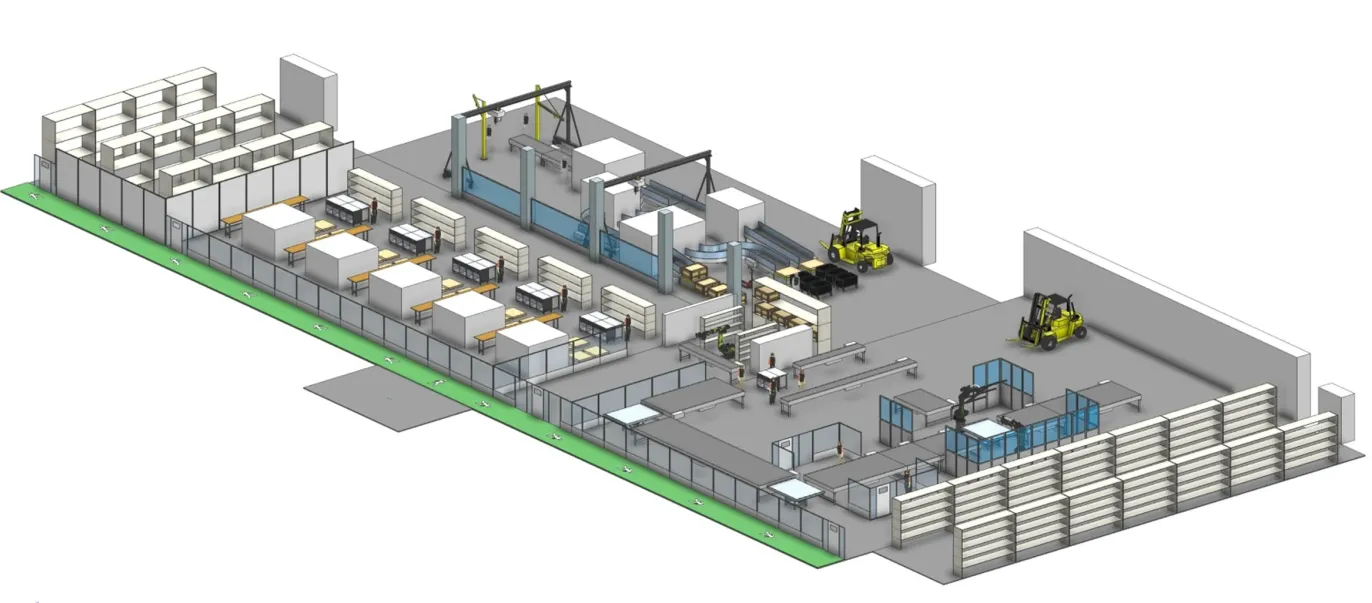
GreenTech Industries has secured funding through the UK Government's DRIVE35 programme to automate its EV battery disassembly line, taking a live commercial operation from manual work to high-rate automation.
The short answer
GTI has secured UK Government DRIVE35 funding for AutoDMR, a 12-month project with the Manufacturing Technology Centre and Coventry University. It automates the two manual steps that hold back throughput at GTI's Southam site: assessing each pack the moment it arrives, and opening it to protect the components still within their design life. The aim is to lift the rate to around eight times current capacity.
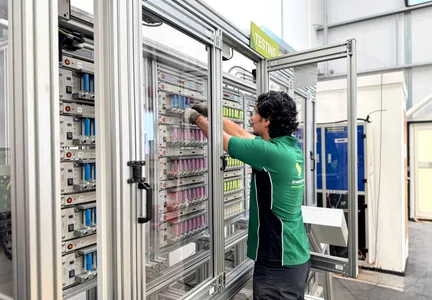
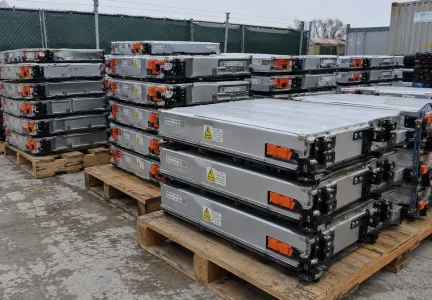
GTI already runs this operation today, by hand. At its Southam site it takes around three tonnes of batteries apart every week, processing motorsport, EV and battery energy storage (BESS) systems and recovering the components, cells, data and usable life that conventional processing destroys. The market is here today; the constraint is the rate at which the UK can process these packs, and protecting the valuable parts inside before they are shredded. That is what this funding changes.
As more electric vehicles reach the end of their first life, the UK faces a growing volume of large, high-voltage battery packs and almost no domestic capacity to handle them safely at scale. By 2040, that volume is expected to reach 235,000 tonnes a year (SMMT). Today, most packs are shredded for scrap or shipped overseas, losing the components, materials, skills and value still inside them.
A focused change: two steps in a proven line
AutoDMR (Automated Disassembly, Material Recovery of EV batteries) is a 12-month project led by GTI, in collaboration with the Manufacturing Technology Centre (MTC) and Coventry University. It automates the two manual steps that hold back throughput: assessing each pack the moment it arrives, and opening it to retain the value of the components inside that are still good, before they reach the end of their design life. It is a focused change to a proven line.
Everything else is already in place. GTI runs the operation commercially under an Environment Agency permit, to ISO 9001, 14001 and 45001 standards, on disassembly procedures refined over nine years. AutoDMR changes only the two steps that hold back rate. The rest of the line stays exactly as it works today.
Under AutoDMR, rapid inspection will establish a pack’s condition in minutes, and a factory digital twin, a live virtual model of the line, will configure the process to each battery type in real time. Robotics, machine vision and data-driven tools will then carry out the disassembly. Everything downstream, including grading, routing and GTI’s established supply chain, continues to run as it does today. The target is a step change in rate: around eight times GTI’s current capacity.
No single technology here is new. What is new is bringing them together into one production system: automated disassembly, fast condition assessment and digital coordination at this scale. No UK line currently does it.
Keeping the value in the UK
By harvesting components rather than shredding them, AutoDMR is designed to keep the components, cells, materials and skilled jobs in the UK, making good parts available for UK service and repairs, strengthening domestic supply chains, and supporting the UK Critical Minerals Strategy target of meeting 20% of critical mineral needs through recycling by 2035.
“End-of-life EV batteries are not waste — they are an asset, and this project is how the UK starts recovering that value at the rate the market is now demanding: keeping the components, the materials and the skilled jobs here. AutoDMR is the factory we have spent nine years getting ready for. What makes it different is that the digital side leads the plant: every pack is assessed the moment it arrives, and the line configures itself to that battery — not the other way round. We are grateful to the Advanced Propulsion Centre and to our partners at the MTC and Coventry University — now we get to build it.”

“The projects announced today demonstrate the depth of innovation and engineering excellence that exists across the UK automotive sector. Through DRIVE35, we are supporting businesses to move promising technologies to commercial deployment and manufacturing at scale. This investment is about far more than individual projects. It is about strengthening the UK’s capability to design, develop and build the technologies that will define the vehicles of the future. By bringing together industry, government and academia, DRIVE35 is helping create the conditions for long-term growth, increasing investor confidence and reinforcing the UK’s position as one of the world’s leading destinations for automotive innovation.”
Ian Constance, Chief Executive, Advanced Propulsion Centre UK
End-of-first-life EV batteries hold components, cells, data and usable life the UK can’t afford to lose.
Read more: GTI precision disassembly · Advanced Propulsion Centre UK
DRIVE35 is delivered by the Department for Business, Innovation, Science and Trade in partnership with the Advanced Propulsion Centre UK and Innovate UK. Grant funding is provided by the UK Government.
Frequently asked questions
- What is AutoDMR?
- AutoDMR (Automated Disassembly, Material Recovery of EV batteries) is a 12-month project led by GreenTech Industries in collaboration with the Manufacturing Technology Centre (MTC) and Coventry University. It automates the two manual steps that hold back throughput on GTI's Southam disassembly line: assessing each pack the moment it arrives, and opening it to retain the value of the components inside that are still good.
- What is DRIVE35?
- DRIVE35 is delivered by the Department for Business, Innovation, Science and Trade in partnership with the Advanced Propulsion Centre UK and Innovate UK. Grant funding is provided by the UK Government.
- How much will AutoDMR increase GTI's capacity?
- To around eight times current capacity. GTI takes roughly three tonnes of batteries apart every week by hand at its Southam site today. AutoDMR automates the two steps that hold that rate back, while everything downstream continues to run as it does now.