


Motorsport
Taken apart so completely,
there’s nothing left to copy.
Race programmes retire packs, powertrains, and the tooling behind them, and every piece carries IP a competitor would pay to see. GreenTech Industries disassembles and disposes of the lot under controlled conditions, documented to destruction, so nothing that leaves your programme gives its IP away.
What we do for motorsport
Three kinds of asset,
all under the same IP protection.
Race programmes generate some of the most IP-dense hardware in the automotive world, and all of it eventually needs to go. Packs, powertrains and motors, prototype hardware, and the tooling that made them: GreenTech Industries retires each under the same controlled process.
Nothing to copy
Packs, powertrains and motors
Race-grade packs, motors, and powertrain assemblies go through precision disassembly in a controlled environment, carried out by HV-trained operators. Broken down to the point where no part, cell, or fragment shows a competitor how it worked.
Nothing to trace
Prototype powertrains
Development assets that were never released to market are retired so that no part of them reaches it. What was built for test stays in test.
Everything documented
Tooling and confidential hardware
The tools that made the parts reveal as much as the parts themselves. Tooling, fixtures, and IP-sensitive hardware are processed under the same chain of custody, documented from collection to destruction.
IP protection that lasts after the hardware has gone.
The motorsport reality
Every part carries information.
Retiring it well keeps it yours.
A retired race asset is a set of answers to questions competitors are still asking. Every component carries information about how it was built, what it weighs, and how it manages heat.

Parts that talk
A pack, a motor or a powertrain assembly can be measured, sectioned, and reverse-engineered. Anything that leaves a programme intact is information moving in the open.
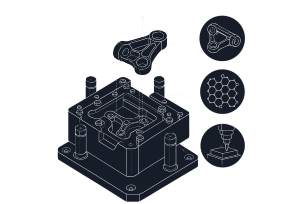
The tools reveal the parts
Access to a tool is access to the part it made: its geometry, material and process. Tooling carries the same sensitivity as the hardware itself, and it needs the same protection at end of life.
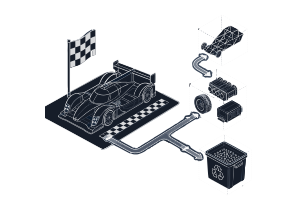
Test assets outlive the test
Prototype and development vehicles were never meant to reach the market. Without a controlled retirement route, parts of them can reach it through disposal chains nobody fully traces.
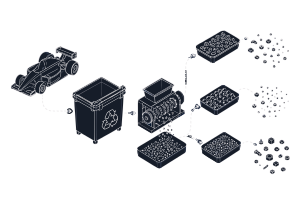
General routes lose the trail
A general disposal route aggregates, shreds, and resells, with no record of where each component ends up or in how many pieces. For IP-sensitive hardware, that makes disposal a distribution risk.
Retiring the asset is easy. Recording and protecting what it knows is the work, and what comes back to you feeds the next build.
How we keep it secure
A protocol you can audit.
One site, one line
Every IP-sensitive asset is processed at GTI’s own facility, on GTI’s own line, by GTI’s own team.
The no-eyes policy
When a sensitive programme is in the building, no other customers come on site until it’s through. Only the programme team and the GTI operators working on it see the hardware.
Below the inference threshold
Precision disassembly continues past the point of recognisable parts. What leaves as recovered material carries no geometry, no assembly logic, nothing to reverse-engineer.
Documented to destruction
Chain of custody from collection to the end of the process, with every component accounted for and every disposal recorded. Every report and every data point from your programme is yours, held separately from GTI’s own data. You direct what we look for, and you own what we find.
Taken apart past the point of recognition. That’s the security.
What you get back
The asset goes. Your IP and data stay yours.
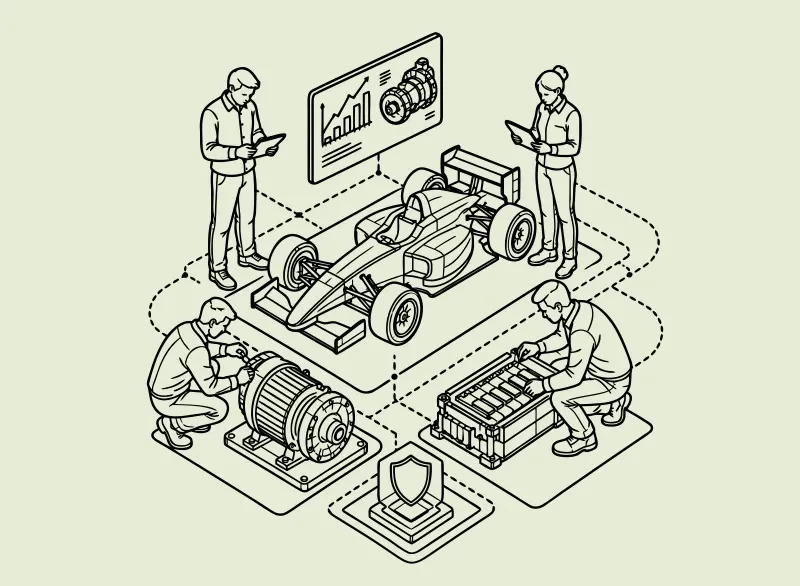
Race-grade heritage
Built by people who built these programmes
The McLaren P1. The Aston Martin Rapide E. The Lotus Evija. The McLaren Solus GT. The founders of GTI built those programmes, which means they know exactly what an IP-sensitive asset is, and what it takes to protect one.

Collection to destruction
Chain-of-custody documentation
The Duty of Care and transport documentation each collection needs, with per-component traceability from collection to the end of the process.
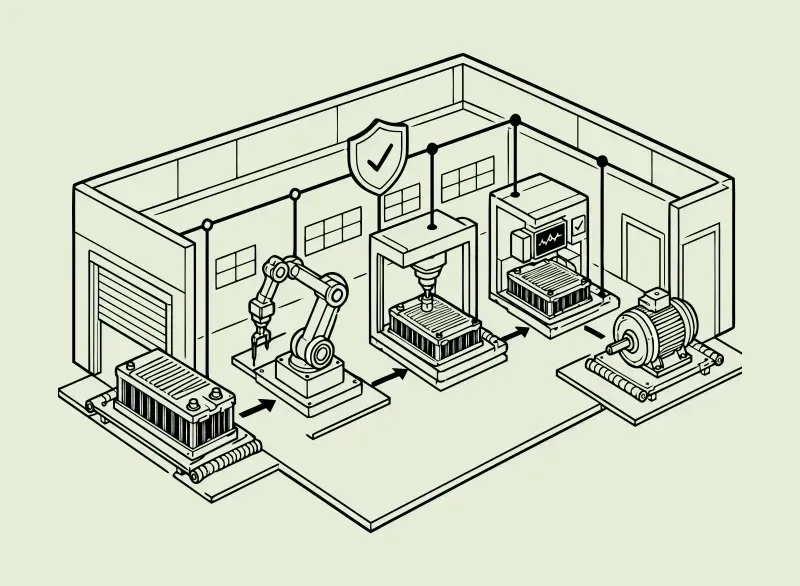
One site
Processed entirely in-house
Every asset is handled at GTI’s own facility, on GTI’s own line, with one team accountable from start to finish.
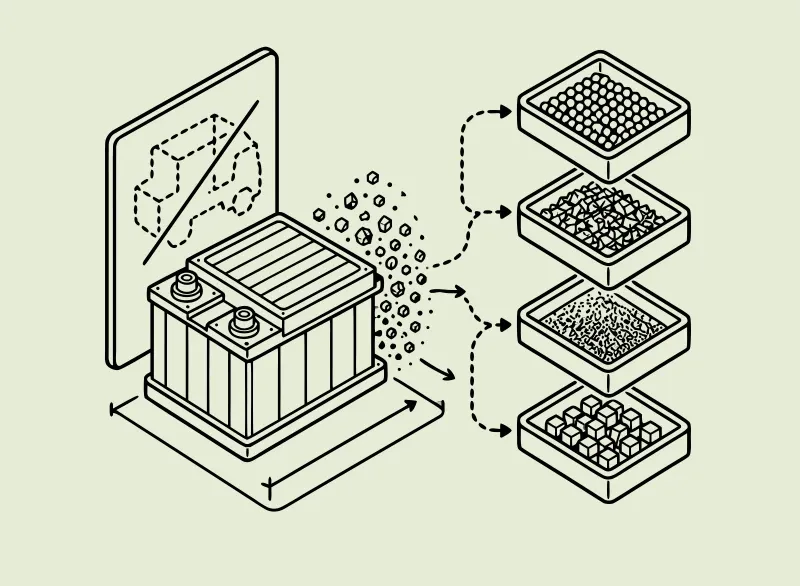
Materials only
What returns, returns anonymous
Value comes back at materials level: metals and recovered content with no geometry or markings left on them.
Every component accounted for, and none of it identifiable.
How we work
Three ways into the partnership.
Engagements are scoped around the programme calendar: a one-off retirement, standing support through a development cycle, or prototype retirement.
End-of-programme retirement
Mode 01A season closes or a programme ends, and the hardware needs to go: packs, powertrains, motors and tooling. Collected, disassembled and documented under the same protocol.
What we need: asset list, formats, current location, retirement deadline.
Standing development partnership
Mode 02Development programmes generate IP-sensitive scrap continuously. A standing route on an agreed cadence, with the same protocol and documentation every cycle.
What we need: programme cadence, asset types in scope, security requirements, single point of contact.
Prototype and pre-production retirement
Mode 03When a prototype or test programme is retired, its packs, powertrains, motors and IP-sensitive parts come to us, including the ones that carried what the market was never meant to see. The vehicle itself stays with your own disposal route.
What we need: programme status, where the assets are held, required documentation level.
Whatever the engagement, every asset goes through the same protocol.
FAQ
Frequently asked questions
How should a race programme dispose of retired battery packs and powertrains?
Through a controlled route that protects the IP inside them. GreenTech Industries takes race-grade packs, motors and powertrain assemblies apart in a controlled environment, with HV-trained operators, past the point where any part, cell or fragment shows a competitor how it worked. Everything is documented to destruction.
How does GTI keep motorsport IP secure?
Every IP-sensitive asset is processed at GTI’s own facility, on GTI’s own line, by GTI’s own team. When a sensitive programme is in the building, no other customers come on site until it’s through, and only the programme team and the GTI operators working on it see the hardware.
What happens to tooling and fixtures?
They are processed under the same chain of custody as the parts they made, documented from collection to destruction. Access to a tool is access to the part it made, so tooling needs the same protection at end of life.
Who owns the data from a teardown?
You do. Every report and every data point from your programme is yours, held separately from GTI’s own data. You direct what we look for, and you own what we find. What comes back returns at materials level, with no geometry or markings left on it.