

Reinvention: Product Innovation
Components with
proven life,rebuilt for the energy
storage the UK needs.
Four products, one supply of cells. Industr-E for commercial energy storage. Hom-E for residential. Gen-E for the worksites diesel still serves. Replacement packs for the OEM aftermarket.
Every one of them engineered by GreenTech Industries from cells the precision disassembly line recovers, at lower cost than new-build and with lower embodied carbon. The battery that powered a bus can still power a building.
What it is
A disposal problem,
turned into an energy resource.
The UK lacks security of energy supply. Locally generated renewables need local storage. And the components needed to build that storage at scale are already in circulation: lithium cells, copper busbars, aluminium casings and BMS hardware, inside the EV batteries arriving at end-of-first-life every week.
Product Innovation is the third stream. We rebuild the components recovered by the precision disassembly line into battery energy storage systems and replacement packs, at lower cost than new-build and with lower embodied carbon. The same cells, put to a different purpose.
The range, at a glance
- Industr-E: commercial-scale BESS (100 kWh trays → 500 kWh modular)
- Hom-E: residential battery energy storage
- Gen-E: clean urban power generatorIn development
- Replacement EV packs for OEM aftermarket
- All certified to ISO 9001 / 14001 / 45001
- Built from validated, traced EV cells
Circular by design, every product carries its provenance with it: which battery the modules came from, their state of health at integration, and the chain-of-custody record.
As a nation we are energy poor, and our supply is insecure. One way to change that is micro grids that store energy locally.
The range
From the grid to the garage.
One battery story, multiple lives.
Every product in the range starts the same way: with cells that have already proven themselves on the road, recovered through the precision disassembly line, and rebuilt to automotive-grade quality.
Commercial BESS
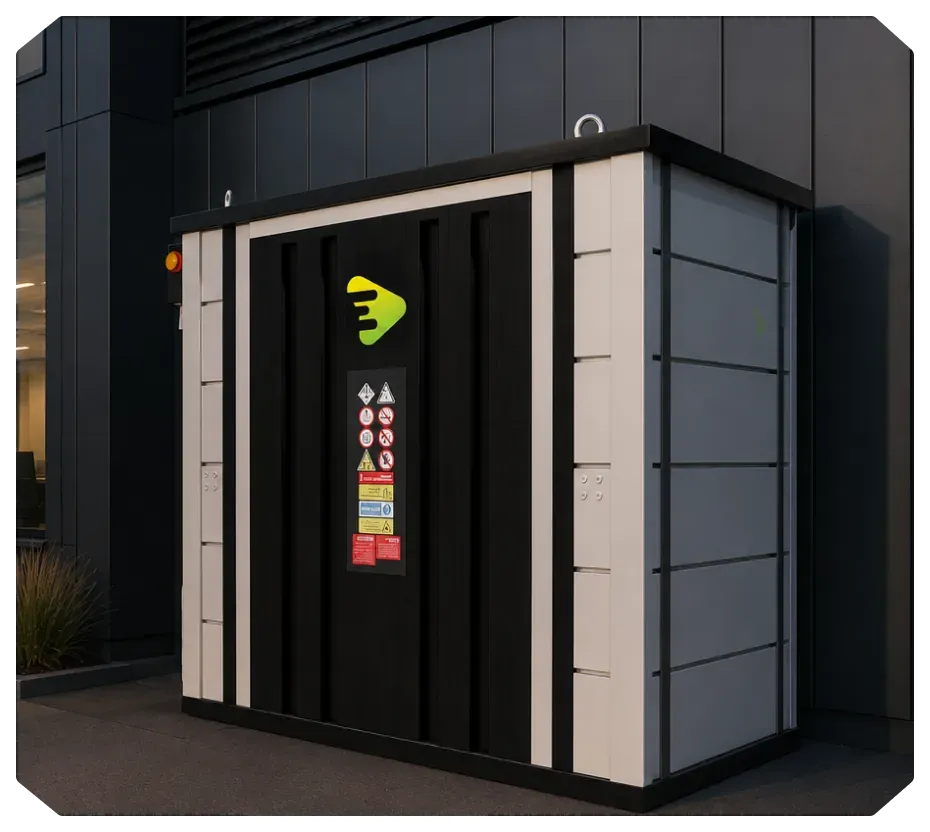
Industr-E
Storage that shifts peak load and trades what you don’t use.
Modular commercial-scale battery energy storage, built from 100 kWh trays, expandable to 500 kWh. Peak-shifting capable, IP65 weatherproofed, crane-deployable. The same unit currently in pipeline conversations with a national hospitality operator across their UK estate.
- Energy independence
- Peak shifting
- Energy trading
- Energy sleeving
Residential BESS
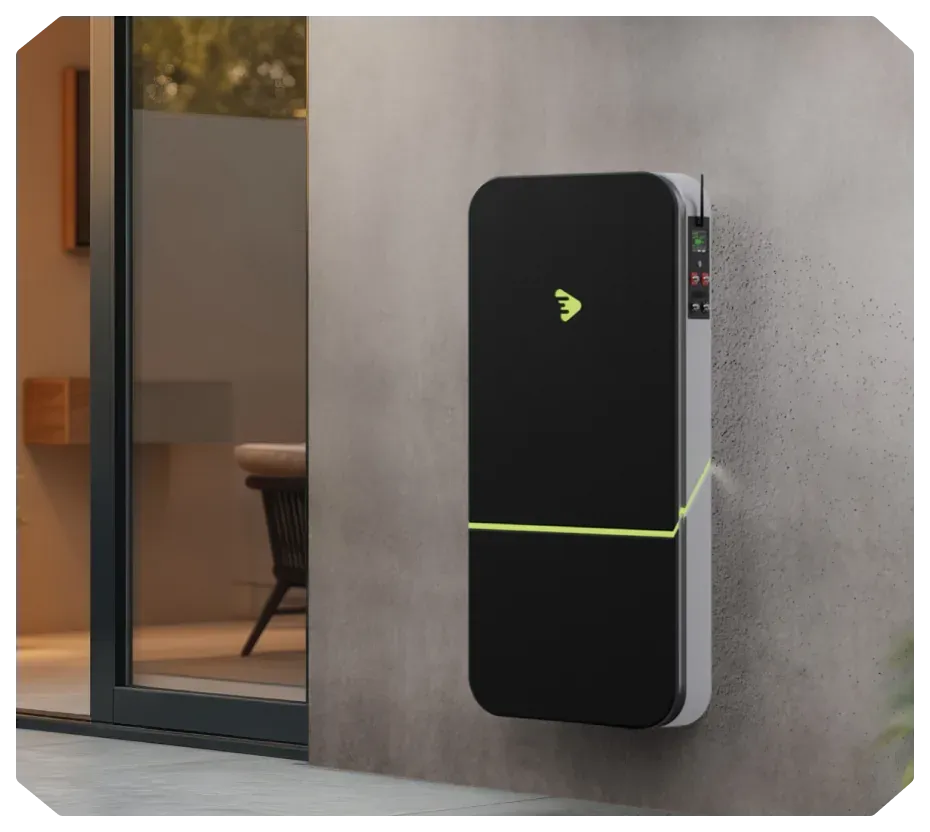
Hom-E
Home storage, built from cells already proven.
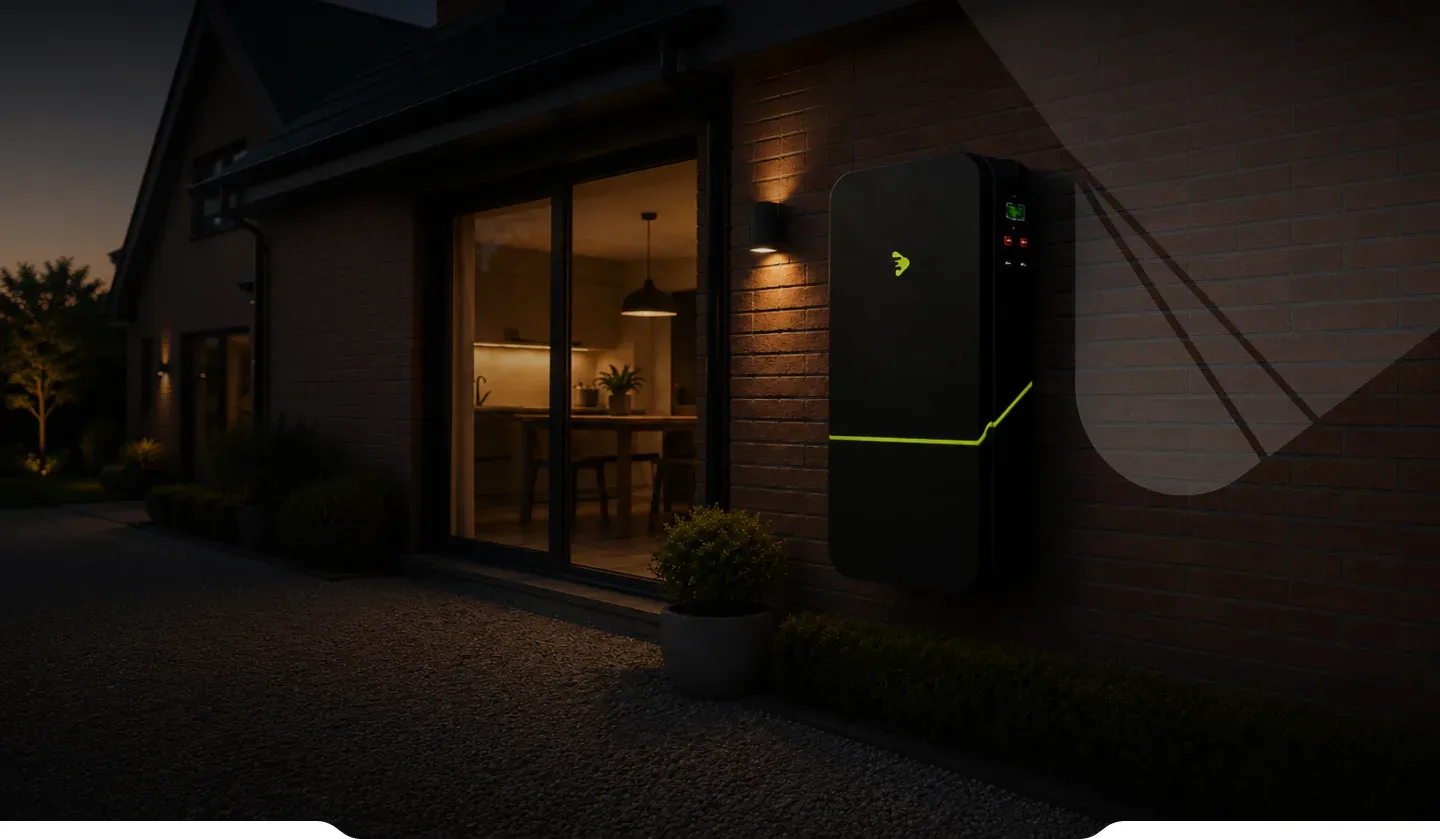
Wall-mounted residential energy storage built from second-life EV battery modules. Aluminium casing, integrated controls. The cells that powered a vehicle, now powering the home.
- Energy independence
- Peak shifting
- EV charging
Mobile generator · In development
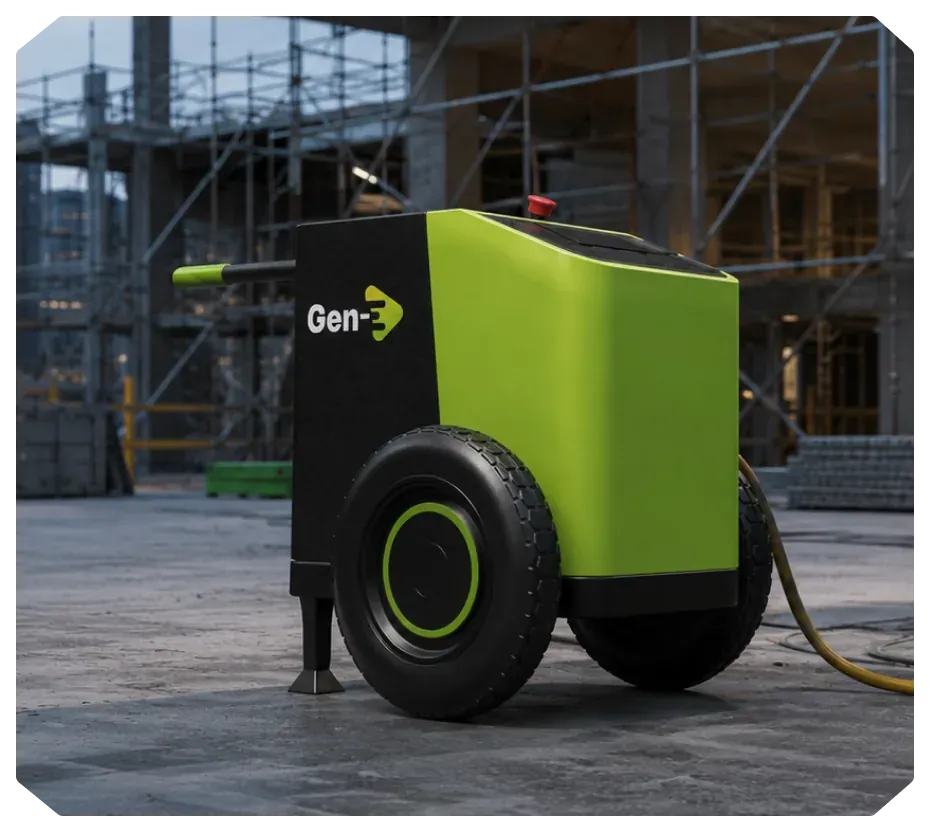
Gen-E
Near-silent power with no on-site emissions.
Clean energy generator for construction sites, urban builds, and enclosed environments. Replaces diesel/petrol generators with second-life EV modules. 10.5–21 kWh configurations, zero on-site emissions, near-silent operation. Currently at concept and design stage.
- Clean energy
- Zero emissions
- Silent
- Portable
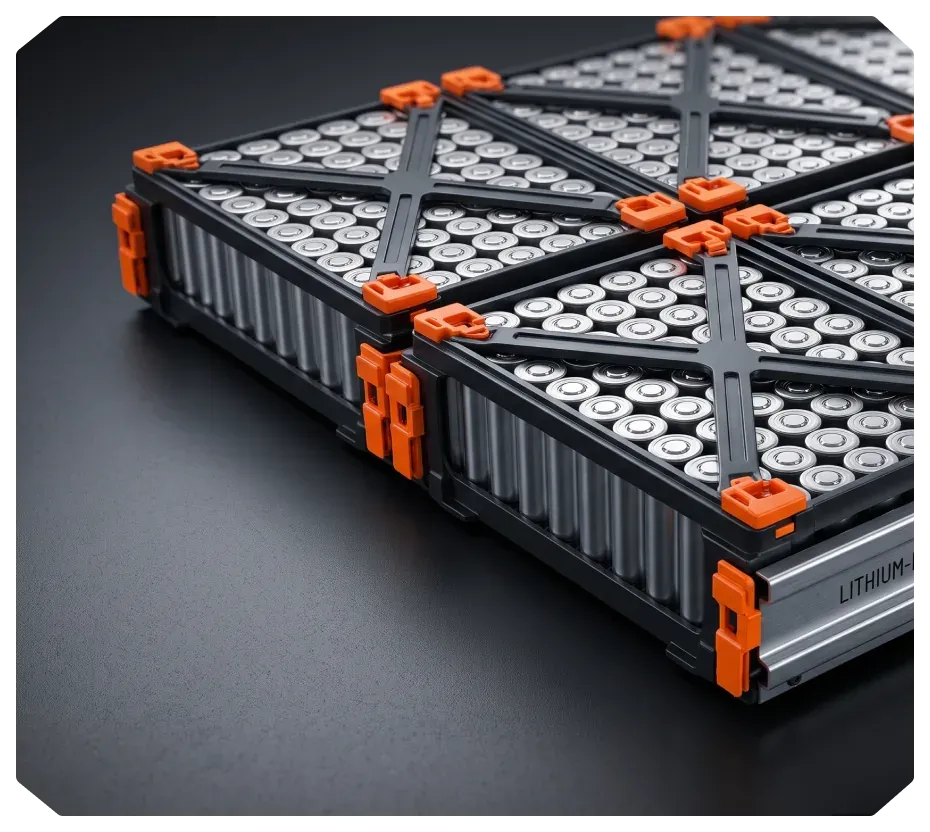
OEM aftermarket
Replacement EV packs
A second life for the vehicle as well as the battery.
Replacement packs rebuilt from validated modules, supplied to OEM aftermarket and independent service partners. PPAP/PSW-grade quality, full traceability, and costing less than a new-build pack, keeping vehicles serviceable that a new-build price would have parked for good. And beyond vehicles: direct to consumer, into the lead-acid replacement market for mobility, garden, and leisure equipment, where replacing the pack costs a fraction of replacing the machine.
- Lower cost
- Fully traceable
- Back on the road
Every cell in these products has already done a job in a vehicle. We know exactly what it’s been through, because we took it out ourselves. That’s the difference between second-life and second-rate.
Three advantages from one supply of cells.
Every product in the range answers a different problem, but the cells inside come from the same place. That’s what makes the model work.
Lower cost than new-build
Second-life cells and no raw-material extraction cost bring the price below new-build storage at equivalent capacity.
Lower embodied carbon
The carbon-intensive part of any lithium battery is the original cell manufacture. Reusing the cell means that footprint is amortised across a second working life.
Domestic supply chain
The UK has the EV battery feedstock. What it’s been missing is the infrastructure to turn that feedstock into products. We built it.
This work doesn’t need to cost the Earth, in two senses: it uses resources that have already been mined, and it keeps the cost down for the customer. The materials already exist. They just need the right hands.
The cheapest cell is the one already built. The cleanest is the one you don’t need to mine again.
Where this fits
Every pack has more than one life.
Reinvention is the third life. By the time material reaches this stage it has already been recovered, validated, and regenerated, ready to be rebuilt into something new.
Retention
The Disassembly Service
Keep every pack’s value in the chain. Components, cells, data, and usable life recovered before any cell is crushed.
ExploreRegeneration
Asset Management
Re-energise modules, repair packs, and hand the diagnostic data back to operators. Fleets stay on the road on the assets they already own.
ExploreReinvention
Product Innovation
Components rebuilt into energy storage and replacement packs. The battery that powered a bus can still power a building.
You are here
Maximising value. Minimising waste.
Two operations. Opposite ends of the grid. The same storage answer.
In practice
FAQ
Frequently asked questions
What is second-life battery energy storage?
Energy storage built from EV battery cells that have already done a job in a vehicle. GreenTech Industries rebuilds the components its precision disassembly line recovers into battery energy storage systems, at lower cost than new-build and with lower embodied carbon. The battery that powered a bus can still power a building.
How do you know what’s inside a second-life battery?
Every product carries its provenance with it: which battery the modules came from, their state of health at integration, and the chain-of-custody record. GTI knows what every cell has been through because it took the cell out itself.
What’s the difference between Industr-E, Hom-E and Gen-E?
Industr-E is modular commercial-scale storage, built from 100 kWh trays and expandable to 500 kWh. Hom-E is wall-mounted residential storage. Gen-E is a clean energy generator for construction sites and urban builds, currently at concept and design stage.
Why is second-life storage lower carbon?
The carbon-intensive part of any lithium battery is the original cell manufacture. Reusing the cell means that footprint is amortised across a second working life.