
EV battery recycling

EV battery recyclingstarts with what’sstill worth keeping.

GreenTech Industries handles end-of-life EV battery packs for businesses across the UK, from three facilities in Warwickshire. It built the precision disassembly line that sits in front of the shredder, recovering the components, cells, data, and remaining usable life before anything is destroyed.

The recycling route

What is EV battery recycling?

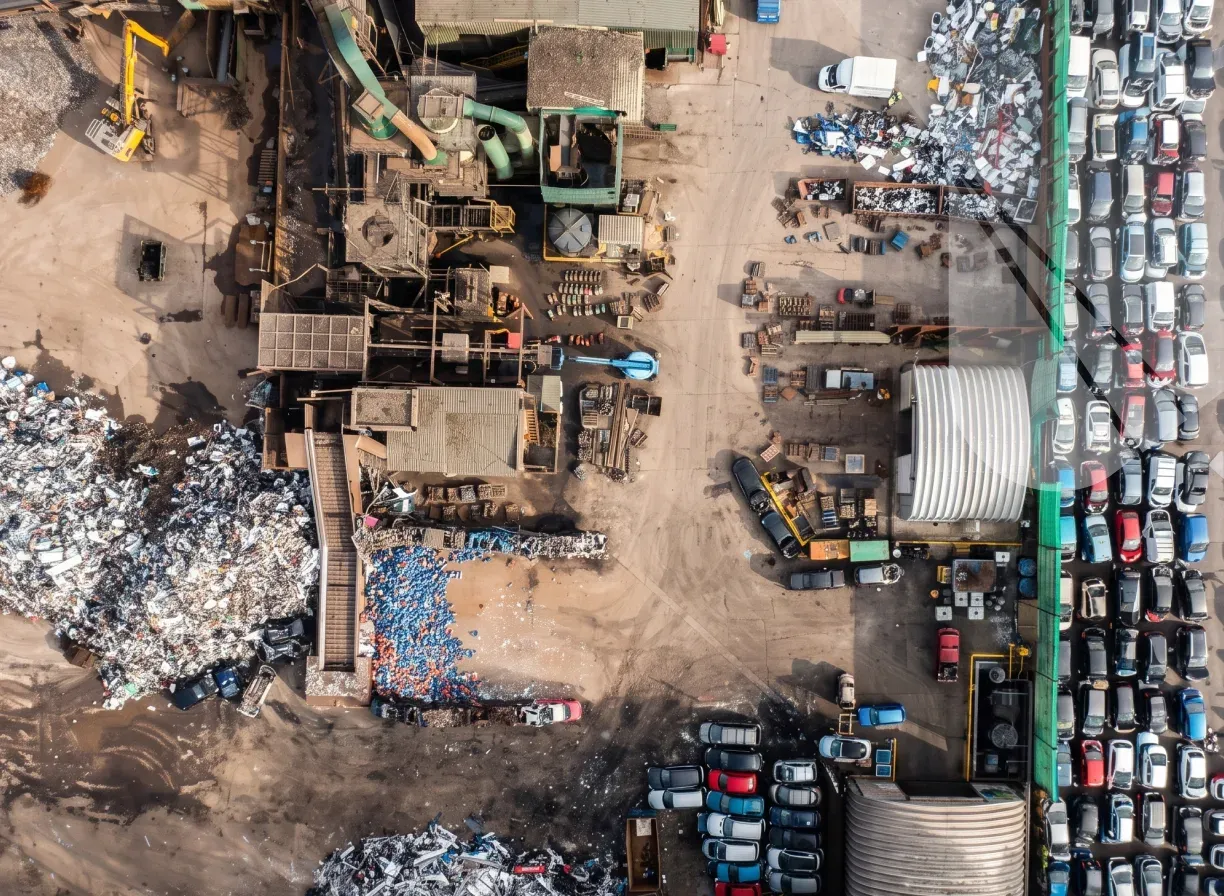
  1. When an end-of-life EV battery arrives in the UK today, it goes straight to a shredder for material recovery.

  2. Bulk shredding produces black mass, a mixed slurry that needs further processing overseas before it can re-enter the supply chain.

  3. Conventional shredding recovers less than 8%. That’s typically 15–20 kg from a standard 250 kg pack.

What happens to an EV battery
at the end of its first life?

The first life ends when the pack can no longer do its job. A battery’s useful life runs well past its warranty. Most are shredded for raw materials, which wipes out the components, cells, data, and remaining usable life inside every pack. SMMT forecasts 235,000 tonnes of EV batteries reaching end of life in the UK by 2040.
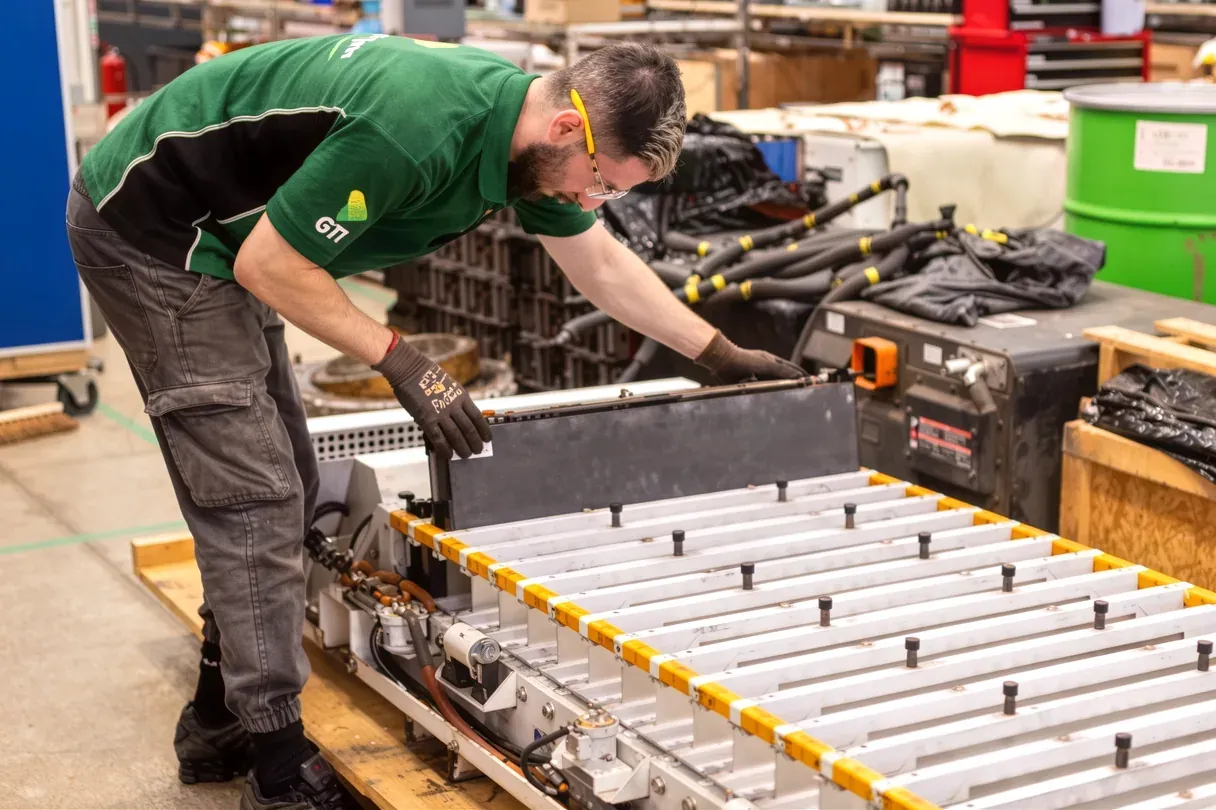

A GTI technician lifting a module out of a large white battery pack on the workshop floor

Before recycling

What does GTI recover
before recycling?

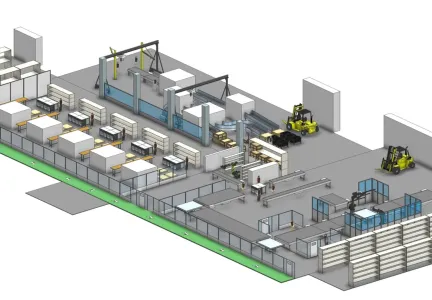
Every battery that arrives at Westfield Road moves through the same four stages of the precision disassembly line.

  1. Safe isolation

    The high-voltage bus is isolated, the coolant drained and the casing removed, then every pack goes through multi-stage HV verification: isolation, bleed-down, external discharge and thermal imaging.

  2. Rapid Battery Assessment (RBA)

    Every pack is assessed on arrival for safety, electrical and mechanical integrity, state of health, chemistry and pack family.

  3. Precision disassembly

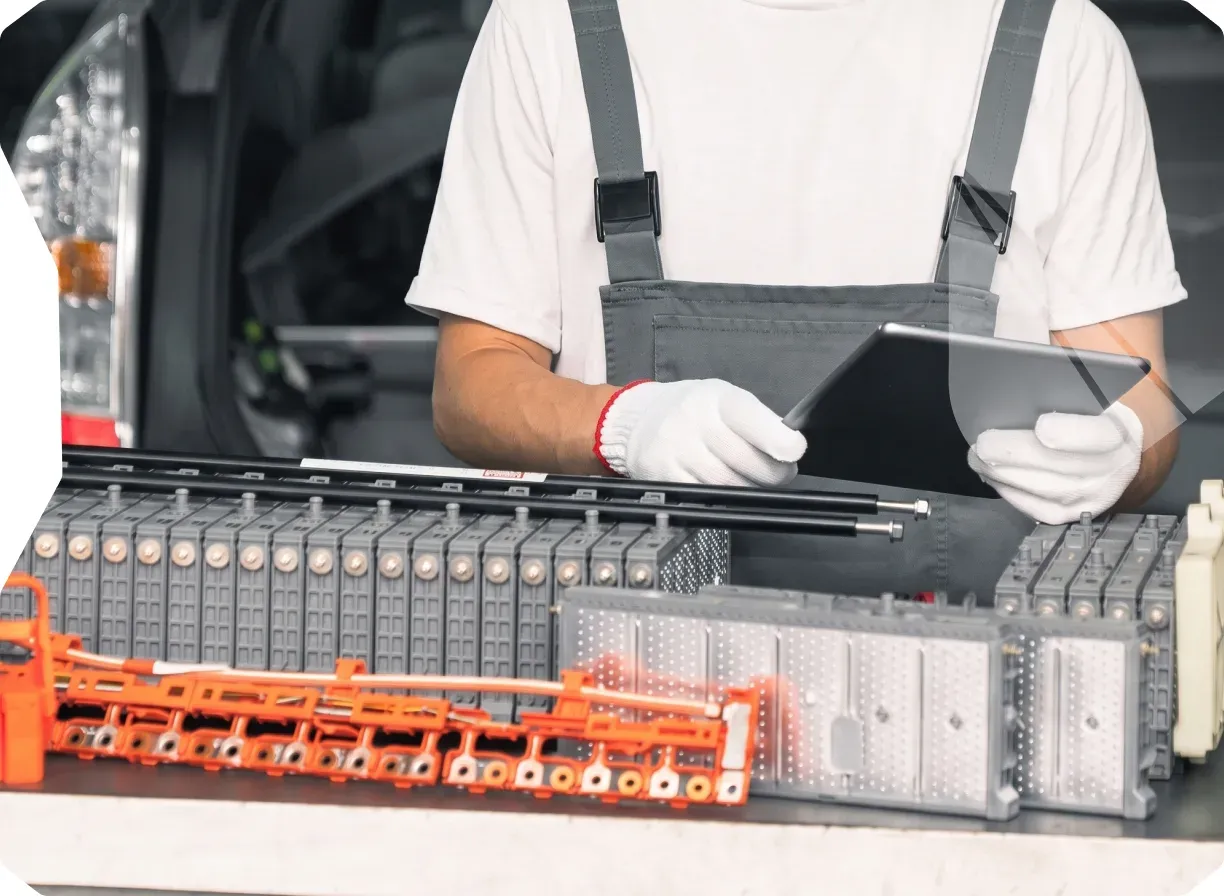
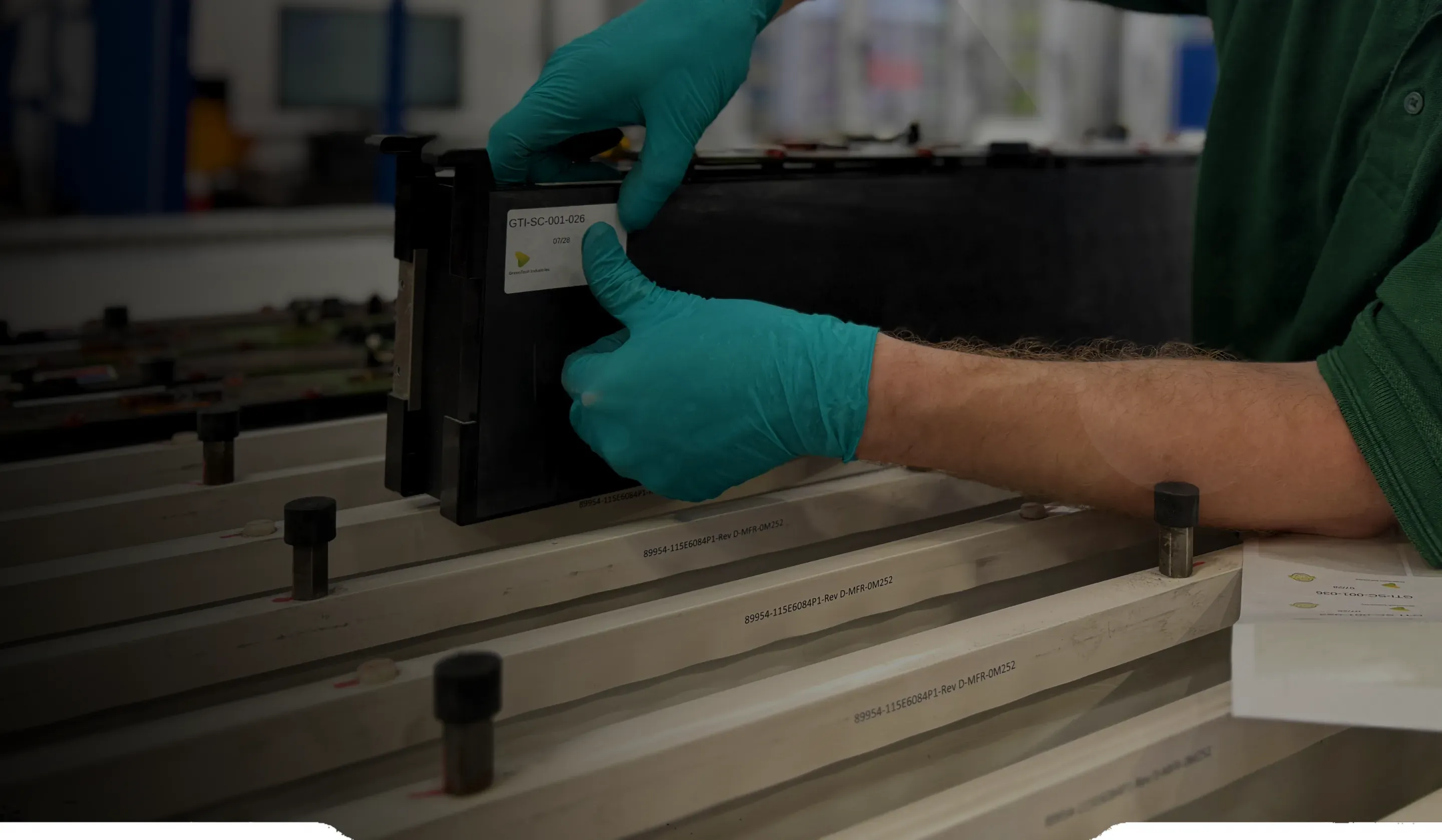
    Every pack is opened and its components harvested: modules, connectors, fuses, clamps, cooling plates and busbars.

  4. Grade & route

    Components, modules and cells are assessed against state-of-health thresholds and routed pack by pack: into Asset Management for module-level reuse, into Product Innovation for second-life storage and replacement packs, or into refiner streams as pre-sorted, clean material.

Shredding comes last, and never by default.

The UK chain

Who handles EV battery recycling in the UK?

EV battery recycling in the UK runs as a chain: collection, precision disassembly, shredding to black mass, then refining. GreenTech Industries works at the start of it.

  1. Collection

    Handing packs to GTI is straightforward. We arrange the most appropriate transport for each collection.

  2. GTI

    Precision disassembly

    It is the first stage in the chain, ahead of black mass and bulk shredding. 74% of every pack, including components, cells, and remaining usable life, is recovered and routed back into the right supply chain (aluminium to aluminium, copper to copper, cells to cells). That’s around 186 kg of every 250 kg pack.

  3. Shredding to black mass

    Refiners get better feedstock, shredders get safer material to process, and OEMs and fleets get reusable parts with the data that comes with them.

  4. Refining

    That work matters: refiners need feedstock, and the materials inside every pack need to make it back into UK supply chains.

EV battery recycling firm to expand Warwickshire operationsNational BBC coverage of GTI’s expansion plans at Sucham Park in Warwickshire, at the heart of the UK’s emerging EV battery processing sector.Read at BBC News

Built for your sector.

Each sector needs something different, and each gets the same precision outcome.

Automotive OEMs.

End-of-life battery management for production runs. Material passports, type approval support, and closed-loop supply chain data.

OEM services
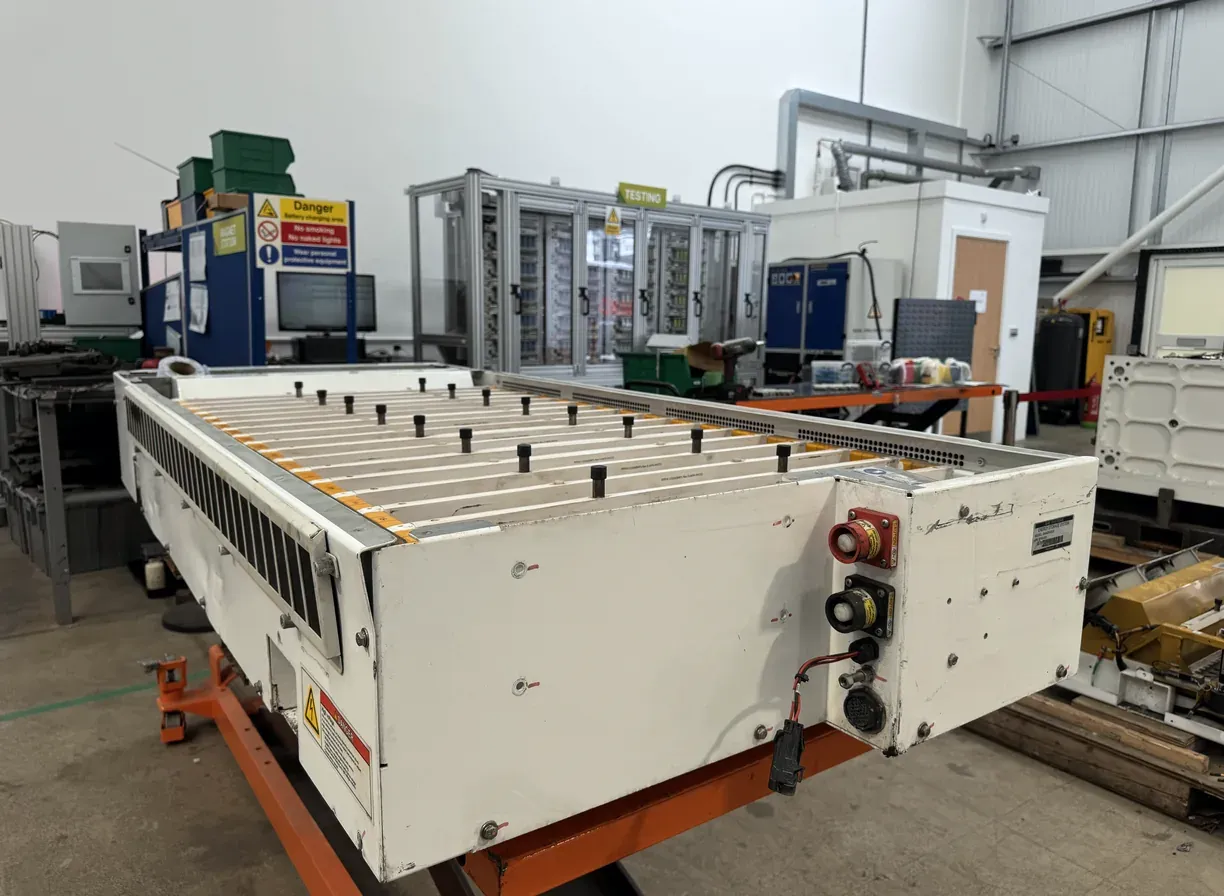
An end-of-life EV battery pack on a lift table at GTI, ready for disassembly

Rules and deadlines

Which rules apply to
end-of-life EV batteries?

Three frameworks shape what happens to end-of-life packs: Duty of Care, the EU Battery Regulation and producer responsibility.

2027

Battery passports

When battery passports become mandatory in 2027, the audit trail is already there.

Duty of Care

Every pack stored, transported, or transferred carries a legal duty of care. Full Duty of Care documentation on every transfer.

EU Battery Regulation

Battery passport, material recovery quotas, and Extended Producer Responsibility land in stages through 2027.

Chain of custody

Material flowing through GTI carries the documentation downstream refiners and producers will increasingly need.

FAQ

Frequently asked questions

What is the scrap value of an EV battery?

It depends on what's still inside. GTI pays ATFs to take the problem away, where sending it the other way costs £400–1,200 a pack.

How much of an EV battery can be recovered?

74% of every pack, including components, cells, and remaining usable life, is recovered and routed back into the right supply chain (aluminium to aluminium, copper to copper, cells to cells). That's around 186 kg of every 250 kg pack. Conventional shredding recovers less than 8%. That's typically 15–20 kg from a standard 250 kg pack.

Why is disassembly better than shredding an EV battery?

When shredding is the only step, components, cells, performance data, and modules with years of usable life are destroyed on the way. Where conventional shredding sees black mass, GTI sees cell-level data, recoverable materials, and components with a second life.

Can end-of-life EV batteries be used for energy storage?

GTI is developing second-life battery energy storage systems for deployment across commercial and industrial sites, manufactured from precision-recovered components at a fraction of the cost and embodied carbon of new-build storage. Components the precision disassembly line recovers are engineered into energy storage and replacement packs from the outset, so the second life is designed in.

What happens to EV batteries after 8 years?

A battery's useful life runs well past its warranty. The first life ends when the pack can no longer do its job.

How do I arrange collection of end-of-life EV batteries?

Handing packs to GTI is straightforward. We arrange the most appropriate transport for each collection. Tell us the pack format, current location and requested collection date.

Is GreenTech Industries a battery recycler?

GreenTech Industries works before recycling. It is the first stage in the chain, ahead of black mass and bulk shredding. Refiners get better feedstock, shredders get safer material to process, and OEMs and fleets get reusable parts with the data that comes with them.

Is precision high-voltage battery disassembly safe?

The high-voltage bus is isolated, the coolant drained and the casing removed, then every pack goes through multi-stage HV verification: isolation, bleed-down, external discharge and thermal imaging. Every pack is made safe before anyone works on it. GreenTech Industries is certified to ISO 9001, 14001 and 45001.

Contact GTI