

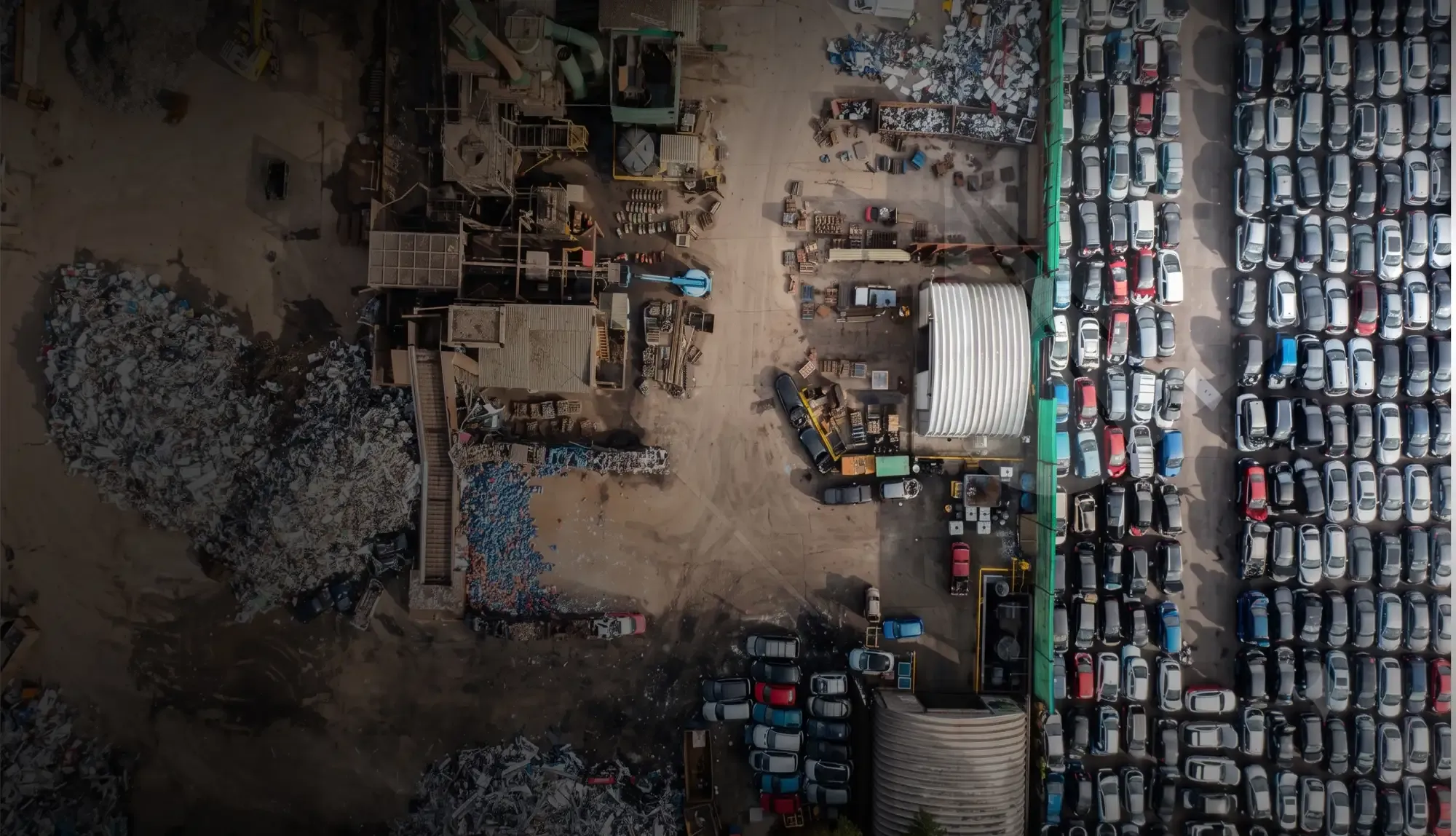
Authorised treatment facilities
Stockpiles off your hands. Money back through the chain.
Every pack in your yard is three problems at once: a high-voltage hazard, an environmental hazard, and space that isn’t earning. The motors stacking up beside them have no route at all. GreenTech Industries collects both in bulk, on a schedule and fully documented, and takes the whole problem away. And because what we collect has value, a share of it comes back to you. The stockpiles stop costing money and start returning it.
What we do for ATFs
One collection
takes three problems off your yard.
GTI collects the packs and motors your yard can’t process, scheduled or one-off, in bulk, with permitted transfer and full documentation from your gate. What happens next is ours to handle: precision processing on our line, and a signed profit share on the value that comes out. You get the documentation for your audit file, the space back, and money where a bill used to be.
- Explore more
Retention
The hazard, gone.
Bulk collection & permitted transfer
Collection of the packs and motors you can’t process in-house. Safe handling, permitted transfer, documented from your gate to our line. Fire risk, leak risk, high-voltage risk: out of your yard and off your risk register.
Less risk
Your yard, earning again.
Space back to work
Stockpiles don’t pay rent. Every load we collect returns the space your business actually runs on: storing and processing vehicles.
More space
Money back on every load.
Profit-share partnerships
What we recover has value, and a signed share of it comes back to you. We pay you to take the problem away, where sending it the other way costs £400–£1,200 a pack.
More money
The stockpiles leave. The high-voltage risk, the environmental risk, and the wasted yard go with them. What comes back: documentation, space, and a signed share of the value.
The ATF reality
The stockpiles are growing.
The routes out aren’t.
The end-of-life vehicle stream now carries high-voltage packs and magnet-heavy motors that most yards have no safe or affordable way to process. The result is the same across the country: growing stockpiles, rising fire risk, and costs the yard’s economics never allowed for.
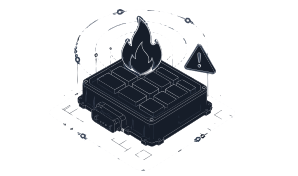
Live packs, live risk.
Stockpiled HV packs carry a different risk profile from the rest of the ELV stream. Fire incidents are already drawing regulatory attention, and every week in the yard is exposure.
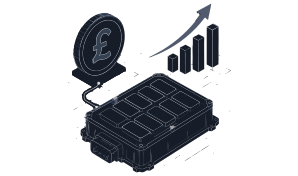
The disposal cost.
£400–£1,200 per pack for compliant disposal (CIWM benchmark). Most yards can’t afford it, so the packs stay, and the problem compounds.
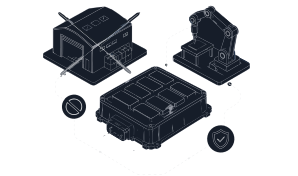
Motors have no route out.
Shred a motor and the magnets clog the machine. Servicing the equipment costs more than the motor returns. So motors stockpile beside the packs.
The yard stops earning.
Yard space is how an ATF makes money. Every stockpiled pack and motor is ground that can’t hold a vehicle.
The stockpiles are growing, and now the route out exists. We built it: collection, processing, documentation and profit share, run as an extension of your operation.
What you get back
Cost off the yard.
Money back through the chain.
Four things change the day GTI starts collecting: your disposal costs, your risk register, your yard space, and your audit file. It’s already happening for the yards we collect from.
£400–£1,200
From disposal cost to profit share
What every pack used to cost you: gone, replaced by a signed share of what we recover. We pay you instead.
Hazards, handled
Fire · leakage · high voltage
Collected safely, with GTI arranging the right transport for each collection. The hazard leaves with the load.
Your yard back
Space that earns
Space goes back to taking in and processing vehicles.
Per pack
Chain-of-custody documentation
The Duty of Care and transport documentation each collection needs, with full traceability returned per pack, ready for ELV reporting, ATF audit and producer-responsibility evidence requirements.
One of the UK’s largest automotive recycling networks already routes its end-of-life packs through this model. It works because it replaces the cost of stockpiling with collection, compliance and money back.
The legislative landscape
Every HV pack in your yard
needs a documented route out.
Three regulatory frameworks already shape what happens to end-of-life HV battery packs in your yard: Duty of Care, end-of-life vehicle reporting, and the EU Battery Regulation, which lands in stages through 2027. A documented route covers all three.
What it means for your yard
Already in force. Every HV pack stored or transferred from your facility carries a legal duty of care. Handing packs to GTI is straightforward. We arrange the most appropriate transport for each collection.
What it means for your reporting
End-of-life vehicle reporting requires evidence of where HV packs and motors went, who processed them, and what was recovered. GTI’s per-pack chain-of-custody record is built to slot directly into that reporting from the first collection.
What it means for your downstream
Material recovery quotas and battery-passport requirements land in stages through 2027. Material flowing through GTI carries the documentation downstream refiners and producers will increasingly need.
The yards that move their stockpiles of packs and motors early stop paying to hold them and start getting paid for them. The regulation will reward the facilities that already chose a route.
How we work
Three ways into the partnership.
ATF partnerships can be structured a few ways, chosen on how much you hold, how often it arrives, and the commercial structure that fits your operation. The examples below are illustrative; the chain-of-custody, operating standard, and per-load documentation are the same whichever way the relationship is set up.
Bulk pack collection
Mode 01One-off bulk collection from your yard: packs, and the motors stockpiled beside them. The lorry turns up, the problem leaves. Full Duty of Care documentation on every transfer.
What we need: yard location, pack formats in the load, any motors you’re holding, approximate load weight, and a collection date.
Standing referral agreement
Mode 02Mode 01, on a schedule: pickups at an agreed cadence, for agreed formats, against monthly volume forecasts. Suits yards with a predictable stream that needs a reliable route out.
What we need: monthly volume forecast, pack and motor formats, compliance scope.
Profit-share MOU
Mode 03Multi-year profit-share MOU on recovered value, packs and motors both. The disposal cost stops; the money back starts, documented per load.
What we need: multi-year volume forecast and commitment, scope of routed formats, governance contact.
Every load gets the same chain of custody and the same documentation.
One network. Every pack accounted for.
In practice
A national vehicle recycling network routes its end-of-life packs through our precision disassembly line. The packs are collected in bulk and documented pack by pack, taking the hazard and the disposal cost off the yard in one move.
FAQ
Frequently asked questions
What should an ATF do with EV batteries it can’t process?
GTI collects the packs and motors your yard can’t process, scheduled or one-off, in bulk, with permitted transfer and full documentation from your gate. They are processed on GTI’s precision line, and a signed share of the value recovered comes back to you.
What Duty of Care paperwork comes back?
The Duty of Care and transport documentation each collection needs, with full traceability returned per pack, ready for ELV reporting, ATF audit and producer-responsibility evidence requirements.
What does compliant EV battery disposal cost?
£400–£1,200 per pack (CIWM benchmark). With GTI, that cost is replaced by a signed share of what’s recovered.
What happens to the electric motors?
Shredding a motor clogs the machine with magnets, so most yards have no route out for them. GTI collects motors alongside the packs, under the same documentation.