
Company · Founding idea
The end of a battery's life is where we begin.
Why precision disassembly, rather than shredding, keeps the value inside a spent EV pack in circulation, and what that unlocks for UK energy security.
Every week, thousands of electric-vehicle batteries reach the end of their first life. The industry's reflex is to shred them. We think that's the most expensive mistake in the value chain, and the biggest opportunity in it.
The short answer
Shredding a spent EV pack destroys most of its value. Precision disassembly recovers the cells, metals and hardware intact, turning what looks like waste into inventory for second-life energy storage. The immediate win is recovered value; the strategic one is domestic energy security, lower-cost storage and avoided carbon.
What’s inside a spent EV pack
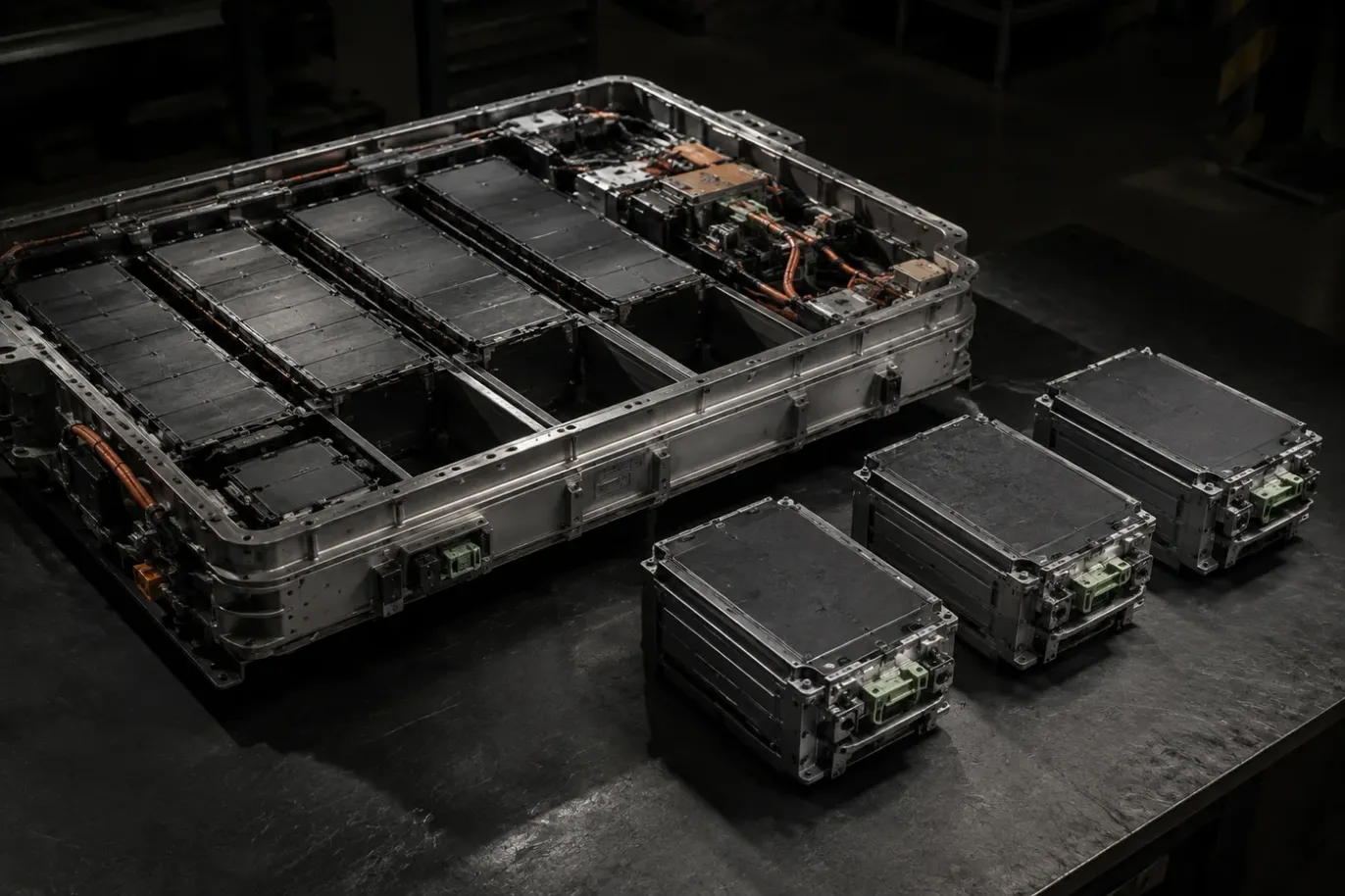
A high-voltage pack coming off a vehicle is a dense, engineered assembly of exactly the things the energy transition is short of, all of it already manufactured, already in the country and already paid for once.
- Cells with proven life: retired against an automotive standard that stationary storage does not apply, and graded on measured state of health rather than assumed depreciation.
- Copper, aluminium and steel: recovered clean and separated, each in its own stream.
- BMS and structural hardware: reused or remanufactured rather than reduced to scrap.
- The pack’s own history: cell-level traceability, which is what makes second-life supply something a buyer can trust.
Why shredding is the expensive default
Shredding is fast and familiar. It is also indiscriminate. Run a pack through a shredder and you turn a structured, recoverable assembly into black mass, a mixed powder you then have to spend energy and chemistry separating back out again. You recover a fraction of the material value, and you throw away the highest-value part entirely: the cells that could have gone on doing useful work.
You cannot shred your way to a circular economy. You have to take things apart.
That is the whole premise of GreenTech Industries: a different first question. Before asking how to destroy a battery safely, ask what is still good inside it.
How disassembly changes the maths
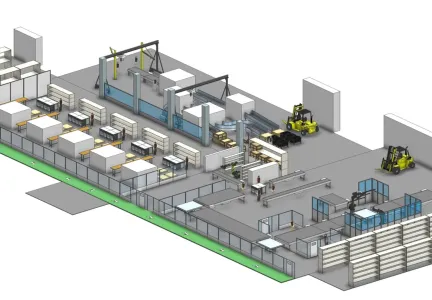
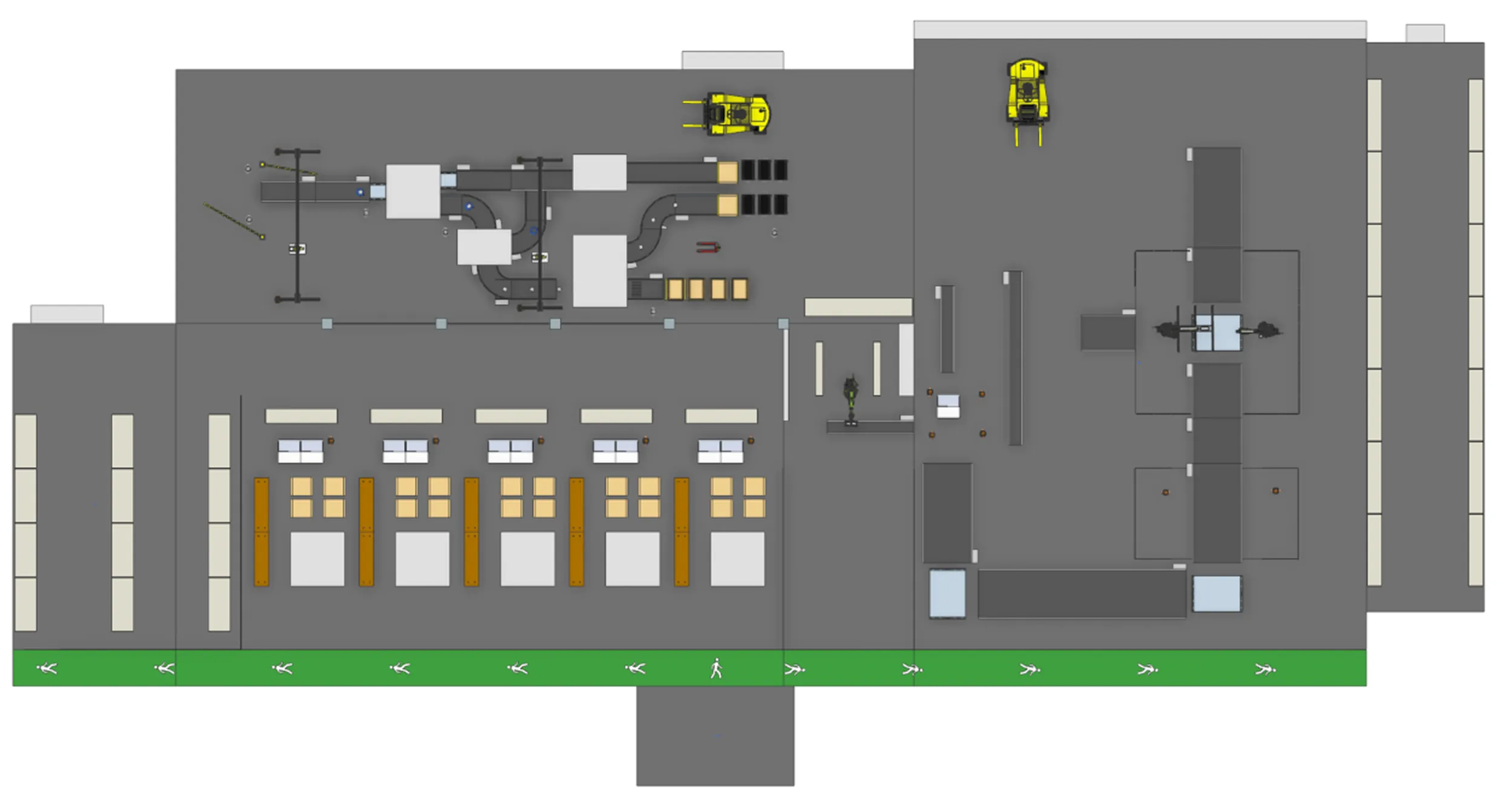
A pack that is taken apart rather than crushed produces separate, graded streams instead of one mixed one, and each is worth more than the share of black mass it would otherwise have become. The next phase of development at Westfield Road targets an 8× throughput uplift over today’s manual operation: 1,500 kg per hour against 190, with per-pack cycle time down from around four hours to ten minutes. That is what turns precision recovery from a demonstration into a process.
What precision recovery unlocks
Do this at scale and three things move at once. Energy security: the UK gains a domestic supply of storage components without mining a single new gram, in line with a Critical Minerals Strategy that commits to meeting 20% of national demand through recycling by 2035. Cost: storage built from recovered cells can undercut new-build. Carbon: the embodied emissions of manufacturing all of it again from raw material are simply avoided.
The battery that powered a bus can still power a building. That is an engineering fact, and building the line that makes it routine is the work.
Is it safe and scalable?
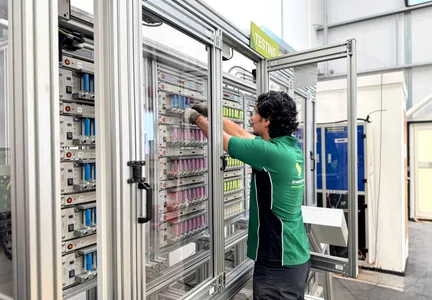
Yes, and it’s the part most people underestimate. High-voltage packs are taken apart under controlled, repeatable conditions, with every cell traced from pack to second life. Automating the line, the next phase of development, is what turns a slow, highly skilled manual teardown into something that runs at industrial volume without trading away safety. That combination of controlled, traceable and repeatable work is what makes second-life supply something a grid operator or an OEM can rely on.
Frequently asked questions
- Why is disassembly better than shredding an EV battery?
- Shredding turns a structured, recoverable pack into low-grade black mass and destroys the highest-value part: the cells. Precision disassembly recovers cells, copper, aluminium and BMS hardware intact and traceable, so they can go straight back into service.
- What is a second-life battery?
- A second-life battery is one whose cells still hold years of useful capacity after their first automotive life. Rather than being recycled into raw material, they are graded on measured state of health and rebuilt into stationary energy-storage systems.
- Is precision high-voltage battery disassembly safe?
- Yes. On GTI's precision disassembly line, high-voltage packs are made safe first, then taken apart under controlled, repeatable conditions with cell-level traceability. The next phase of development automates the line so it can scale.