
From duty-of-care headache to revenue: rethinking battery liability
For fleets and insurers, an end-of-life battery reads as a liability on a balance sheet. We look at how it becomes an asset.
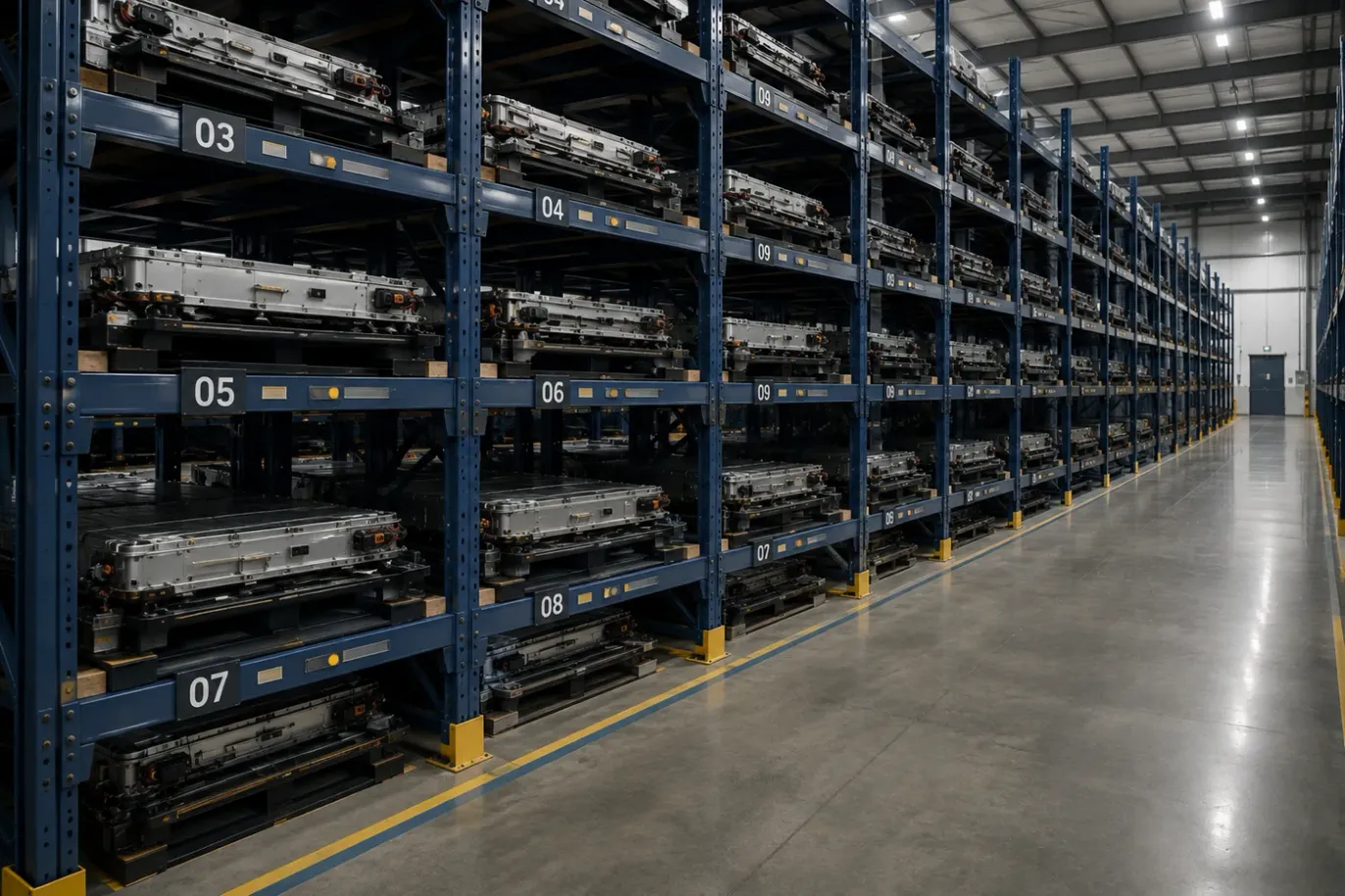
On most balance sheets, an end-of-life battery pack is a cost line. It has to be stored safely, moved compliantly, and disposed of by someone who will charge for the privilege.
That reading is correct given the usual options, and it changes when the options change.
Why it reads as a liability
Three things make a pack look like a cost: nobody knows what is inside it, moving it carries compliance obligations, and the default disposal route pays little because it recovers little.
Each of those comes from the process rather than the pack.
What changes with measurement
A pack whose cells have been graded on measured state of health is a known quantity. Known quantities have prices. The components that come out, such as modules, busbars, casings and BMS hardware, have buyers who currently cannot source them reliably because nobody is producing them at grade.
What changes with documentation
Compliance exposure is expensive largely because demonstrating compliance is awkward. Per-pack chain-of-custody documentation, produced as part of the process rather than reconstructed afterwards, can remove much of that cost.
The commercial shape
Put those together and the relationship inverts. Instead of paying to have a problem removed, the operator is supplying feedstock into a chain that has value, receiving documentation that supports their obligations and, under a profit-share arrangement, taking a portion of what the recovered components realise.
The pack is the same. What changed is how much is known about it.