
Europe just rewrote the rules for what happens when a vehicle dies
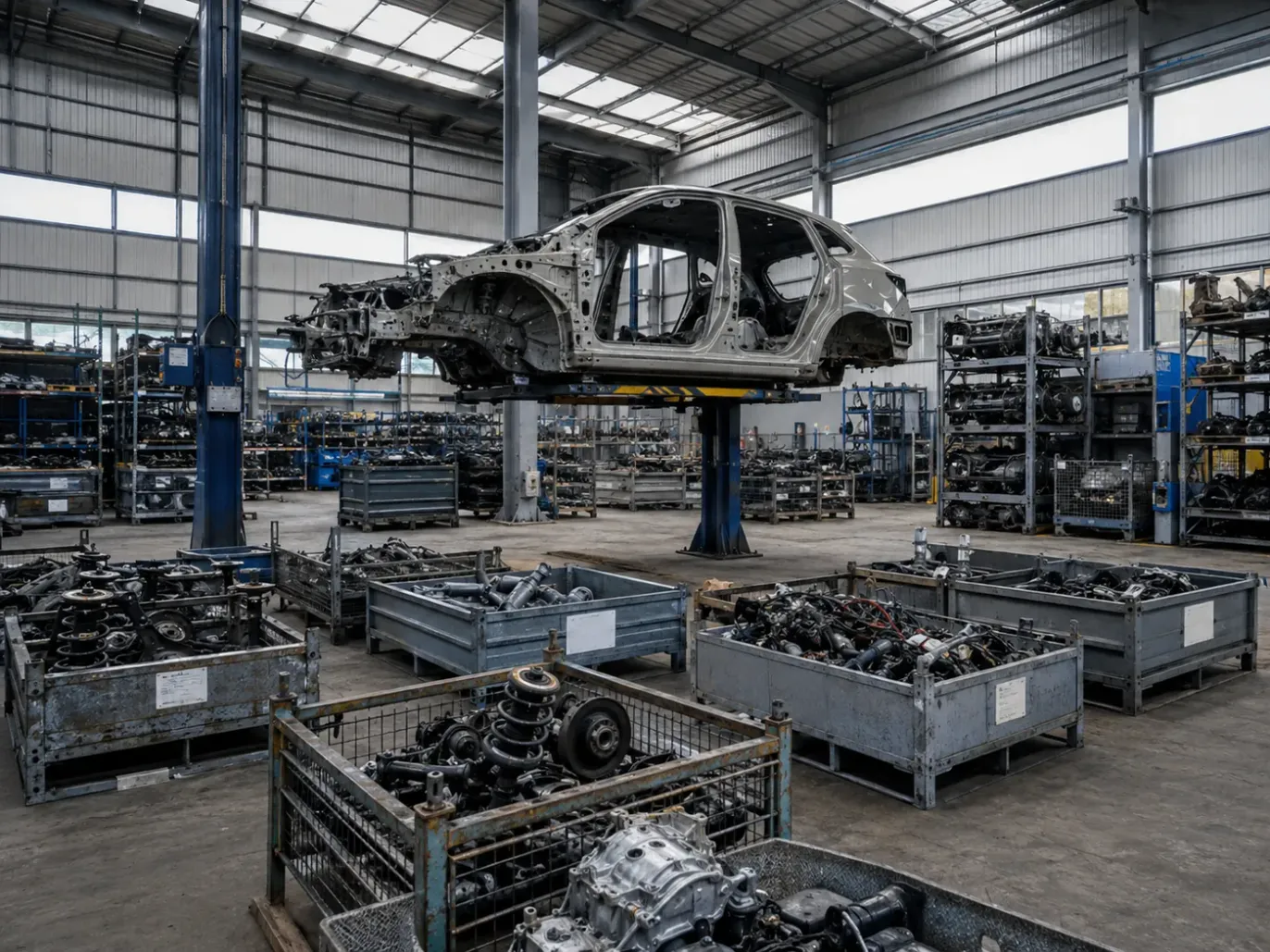
The EU's new End-of-Life Vehicles Regulation is the first overhaul of vehicle circularity rules in more than twenty years, and it expects vehicles to be taken apart rather than shredded.
For more than twenty years, Europe’s end-of-life vehicle rules were written for a world of steel bodies and petrol engines. This week, the Council and Parliament agreed the regulation that replaces them, and it reads like a different century.
The new End-of-Life Vehicles Regulation is the first full overhaul of vehicle circularity law since the early 2000s. Three shifts inside it matter to anyone who builds, insures, runs, or processes vehicles.
Producers now own the end of the story
The regulation establishes harmonised extended producer responsibility across the EU: manufacturers become financially responsible for the end-of-life treatment of the vehicles they sell, including free take-back for the last owner. The cost of a vehicle’s afterlife moves onto the balance sheet of the company that made it, which changes how that company thinks about what the afterlife should look like.
Design for dismantling becomes law
Manufacturers must design vehicles so that parts and components can be removed, and must provide detailed removal instructions to treatment operators. Alongside that sits an obligation to actively promote the reuse, remanufacturing, and refurbishment of parts. The direction of travel is explicit: the value in an end-of-first-life vehicle should be recovered at the highest level possible, and taking things apart properly is how that happens.
The leakage stops
Around 3.5 million vehicles vanish from EU roads every year, unaccounted for and many exported to markets with no treatment standards at all. The regulation answers with an export ban on non-roadworthy used vehicles and recycled-content targets that pull material back into the loop: 15% recycled plastic in new vehicles within six years, 25% within ten, with a fifth of it drawn from end-of-life vehicles themselves.
The scope grows too: trucks, motorcycles and special-purpose vehicles come into the regime for the first time. The rules begin applying two years after entry into force.
What it means here
The UK writes its own rulebook now, but it does not run its own market. Vehicles, parts, and materials move across the Channel in both directions, and the EU has just defined what “properly handled” means for all of them. A regime built on producer responsibility, designed-in dismantlability, and mandated reuse is a regime that needs industrial-scale capability to take vehicles, and the battery packs inside them, apart with precision and put the value back to work.
That capability is exactly what GreenTech Industries builds. The legislation is here, and the infrastructure to meet it has to be built in advance.
Source: Council of the EU, “Circular economy: Council and Parliament strike deal on rules for vehicle circularity and management of end-of-life vehicles”, 12 December 2025.