
The industry's own researchers have called it: repair the battery, don't write off the car
Thatcham Research's EV Blueprint sets out how to stop repairable vehicles being scrapped over battery damage. It's an authoritative statement of a case the whole insurance chain needs answered.

When the automotive risk intelligence specialists at Thatcham Research publish an eight-point plan to prevent unnecessary EV write-offs, the whole insurance chain should read it twice. This week, they did exactly that.
The EV Blueprint addresses a problem insurers know intimately: vehicles being written off over battery damage that could have been assessed and repaired with the right design and the right capability. The battery can represent up to 40% of an EV’s value. Damage it, or even suspect damage, and the economics of the whole claim tilt towards total loss. Thatcham’s research found 44.6% of insurers name battery issues as their primary concern with electric vehicles, with repairers close behind at 41.7%.
What the Blueprint asks for
The recommendations are aimed squarely at vehicle design: batteries built in repairable modules rather than sealed monoliths, safety systems that can be reset rather than forcing replacement, casings that can be opened without destruction, accessible diagnostics, and standardised damage-assessment guidance so that a pack’s true condition can be established rather than assumed.
Run through those asks and one theme carries them all: make the battery knowable. A pack that can be opened, measured, and assessed is a pack that can be repaired, and a claim that can close on evidence.
The direction of the market backs the case. Thatcham’s data shows EV repair costs have already fallen 10.7% as technician experience grows, and the batteries themselves are proving stronger than the write-off patterns suggest, retaining a median 85% of capacity even at eight to nine years old. The hardware is lasting. The assessment capability is what’s been missing.
From blueprint to production line
Design change takes model cycles. The packs being written off this week were designed years ago, and they still need answering now.
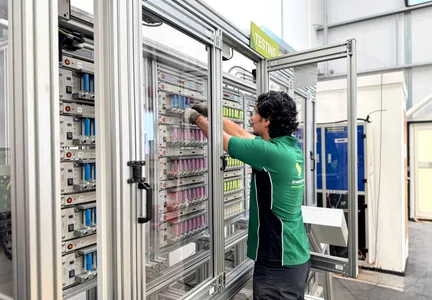
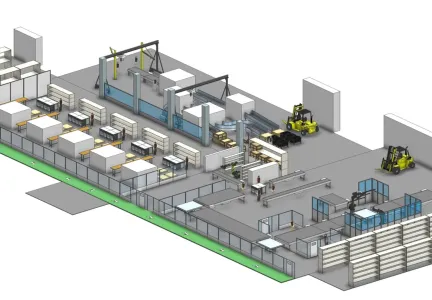
That answer is operational: controlled-environment intake for damaged packs, precision disassembly to module and cell level, state-of-health evidence on what the pack has really been through, and recovered value where the vehicle’s story ends but the battery’s doesn’t. Every pack GreenTech Industries opens adds to exactly the evidence base the Blueprint calls for: how EV batteries really fail, how they really age and how much life they really hold.
The researchers have made the case for a market where batteries are assessed on evidence. GTI is what that looks like with the gloves on.
Source: Thatcham Research, “Electric Vehicle Blueprint”, March 2026.