
Inside the line: making high-voltage disassembly safe and scalable
Safe isolation, cell-level traceability, and why the next phase automates the line so it can scale.
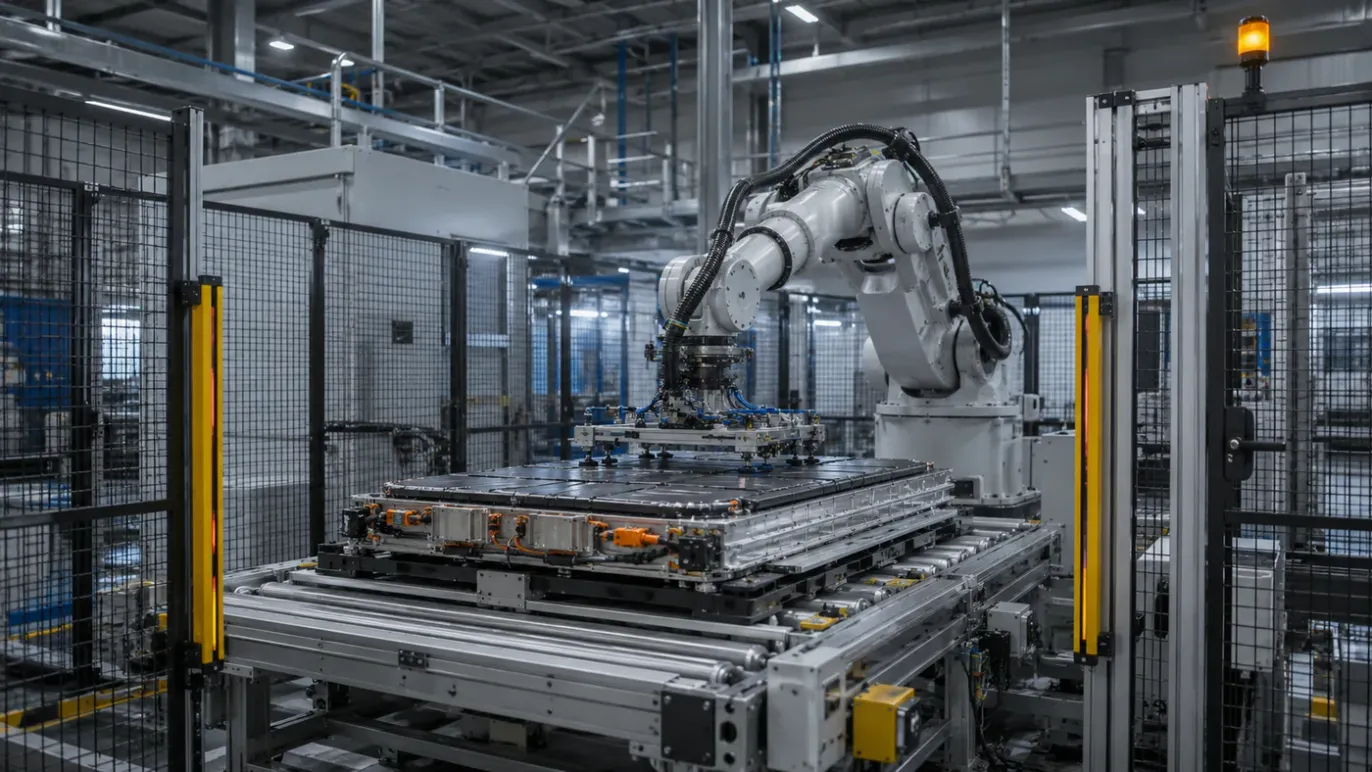
Every EV battery pack that arrives for disassembly arrives live. That single fact shapes the whole line.
Safe isolation comes first
Before anything is opened, the pack has to be brought to a state where working on it is safe. Done manually, this is slow, it is the step most exposed to human error, and it is the step where the consequences of error are worst.
Automating it would change the risk profile and the throughput at the same time, which is rare for a single step.
The pack has to be identified before it is opened
Disassembly sequence varies from pack to pack. Lid types alone come in four varieties: bolted, pinned, welded and glued. Each needs a different method: controlled cut, pin extraction, laser cutting along weld seams, or waterjet for bonded interfaces.
Picking the right one after the pack reaches the station is too late. It has to be decided on arrival, which means the line needs to read the pack before it touches it.
Traceability is a design constraint
Cell-level state of health, chain of custody, and what came out and where it went are produced by instrumenting the line, so the record is a by-product of the process rather than a write-up afterwards.
That is the difference between documentation you can defend and documentation you assembled later.
Why the next phase is automation
Manual teardown works for tens of packs, and the volumes arriving run far higher. The next phase of development automates the line, targeting around eight times today’s manual rate: 1,500 kg per hour against 190, with per-pack cycle time down from roughly four hours to ten minutes. Those targets are what turn precision disassembly from a demonstration into a process.