
Seven months to the battery passport: every pack gets a life story
From February 2027, every EV battery placed on the EU market must carry a digital passport recording what it is, where it came from, and what it's been through. The data era of the battery has a start date.
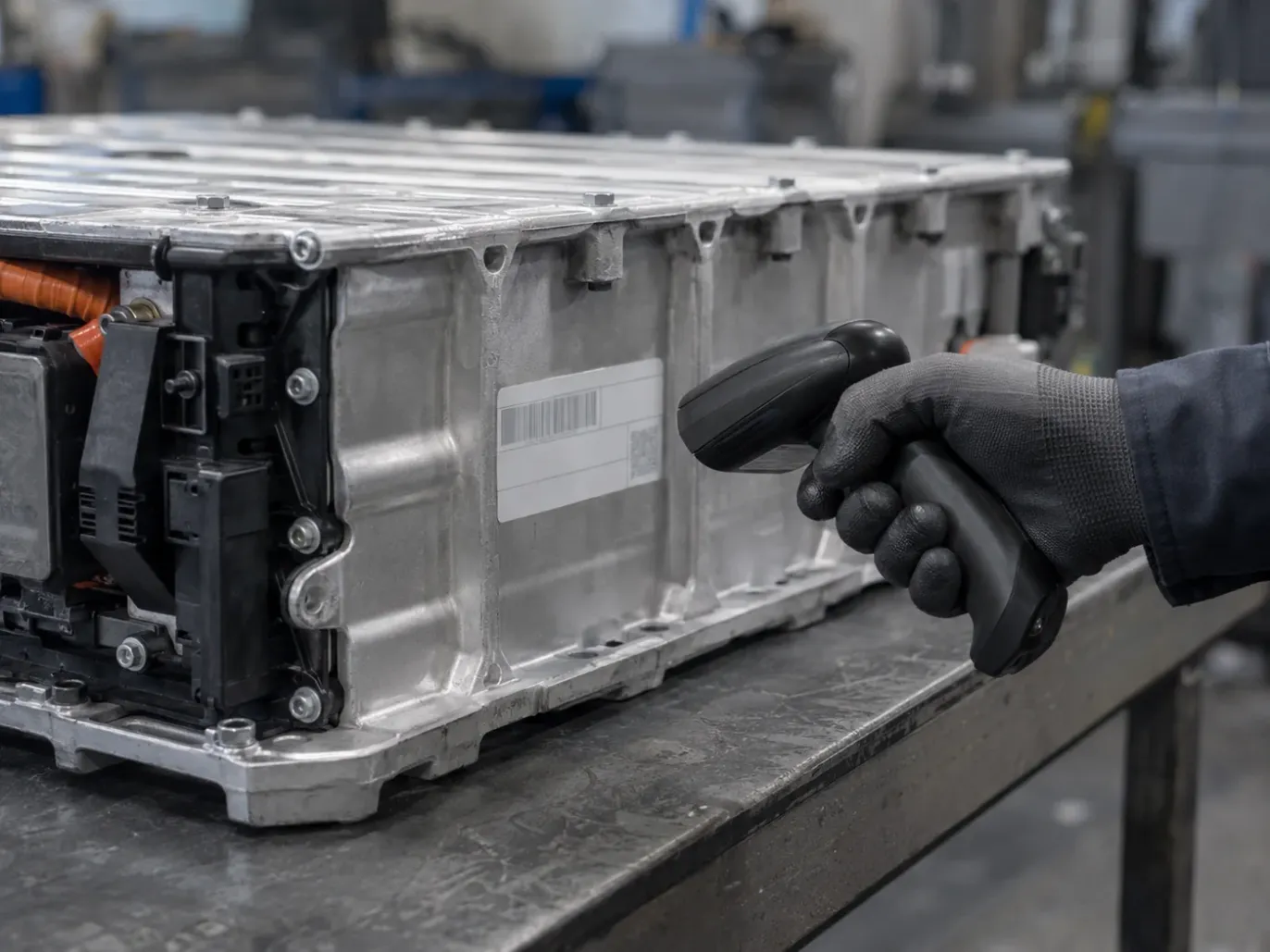
From February 2027, every EV traction battery placed on the EU market must carry a digital passport, by law.
The requirement sits inside the EU Battery Regulation, adopted in 2023 and tightening in stages ever since. Labelling rules took effect this year. The passport is the next step, and the biggest: a QR-coded electronic record for every EV battery, every light-transport battery, and every industrial battery over 2kWh, carrying the pack’s identity, composition, carbon footprint, and lifecycle data through its whole existence.
Across the industry, test environments went live this week so that manufacturers, suppliers, and treatment operators could validate their passport data against the regulation ahead of the deadline. The plumbing is being built now. The deadline holds.
Why a passport changes the economics
A battery without data is priced on assumption. Nobody knows what it’s been through, so everyone assumes the worst: the insurer writing the premium, the buyer weighing the used vehicle, the operator deciding whether a pack comes apart for recovery or goes for destruction.
A battery with a life story is a different asset. Its history is knowable. Its remaining value is assessable. The decision between reuse, regeneration, and material recovery can be made on evidence, pack by pack, at the moment it matters.
That is what the passport regime is for. The QR code is administrative. The consequence is economic: the industry is being moved, by law, from assumption to record.
What the passport needs from the line
A passport records what’s known about a pack. Someone still has to know it. The deepest data a battery ever gives up comes at the end of its first life, when it’s opened, measured and assessed properly: what failed, what didn’t, what the cells still hold.
That’s where GreenTech Industries works. Every pack that crosses GTI’s precision disassembly line returns exactly the kind of evidence the passport era runs on: state-of-health, serviceability, provenance and chain of custody. The regulation makes battery data mandatory. The disassembly line is where the most valuable of it gets made.
The passport arrives in February 2027. The packs it will describe are already on the road, and the infrastructure to read them properly has to exist on this side of the Channel too.
Source: EU Battery Regulation 2023/1542; battery passport requirements apply from February 2027.